


 English
  Español
Instant Electric Faucet with Quick Free Installation: Buyer Guide
Date:2026-08-17
Content
- 1 Instant Electric Faucet With Quick Free Installation: The Direct Answer
- 2 Common Types and Core Features of Instant Electric Faucets
- 3 How Instant Electric Faucets Work: Structure and Heating Principle
- 4 Why Free and Quick Installation Matters for Buyers and Contractors
- 5 Selecting the Right Instant Electric Faucet for Your Application
- 6 Performance Comparison: Instant Electric Faucet vs Traditional Tank Water Heater
- 7 Adoption Trends for Compact Instant Water Heating Solutions
- 8 Application Scenarios Breakdown for Instant Electric Faucets
- 9 Installation Guidelines and Safety Considerations
- 10 Maintenance Tips to Extend Product Lifespan
- 11 Choosing a Reliable Instant Electric Faucet Manufacturer and Supplier
- 12 Frequently Asked Questions
- 12.1 Q1: Does an instant electric faucet require a separate storage tank?
- 12.2 Q2: How long does installation usually take?
- 12.3 Q3: What voltage options are available?
- 12.4 Q4: Are these faucets suitable for both kitchen and bathroom use?
- 12.5 Q5: What safety features should buyers look for?
- 12.6 Q6: Can manufacturers support OEM or private label orders?
Instant Electric Faucet With Quick Free Installation: The Direct Answer
An instant electric quick free installation faucet is a compact, self-contained water heating tap that heats water as it passes through an internal heating chamber, so there is no need for a separate storage tank, a dedicated boiler room, or extensive plumbing rework. Because the heating unit is built directly into the faucet body, most models can be mounted on an existing water line in well under an hour, which is why distributors and installers commonly describe this category as free installation or quick installation electric faucets. For buyers comparing water heating options for kitchens, bathrooms, dormitories, or rental units, the short answer is that an instant electric faucet is generally the fastest and least disruptive way to add hot water to a single point of use without a full water heater installation project.
This guide walks through the common types of instant electric faucets, how the heating structure works, where each configuration performs best, how the category compares with tank-based heaters, and what buyers, distributors, and property managers should check before placing an order. The article also includes practical selection criteria, maintenance guidance, and answers to the questions most frequently raised by wholesale buyers and end users evaluating a quick installation electric faucet for kitchen, bathroom, or light commercial washroom use.
Throughout this article, references to installation time, adoption trends, and comparative performance are presented as illustrative, industry-observed ranges rather than figures from a single proprietary study, since actual results vary by model, water pressure, and local installation conditions.
Key takeaway: An instant electric faucet with quick free installation removes the tank, the boiler room, and most of the plumbing labor, making it a practical option anywhere fast point-of-use hot water is needed.
Common Types and Core Features of Instant Electric Faucets
Instant electric faucets are generally grouped by mounting style, control method, and intended point of use. While the internal heating principle is similar across the category, the housing shape, power rating, and control interface differ depending on whether the unit is designed for a kitchen sink, a wash basin, or a small shower connection. Understanding these variations helps buyers match the right configuration to the right project instead of treating all tankless electric faucets as interchangeable.
Kitchen Instant Electric Faucets
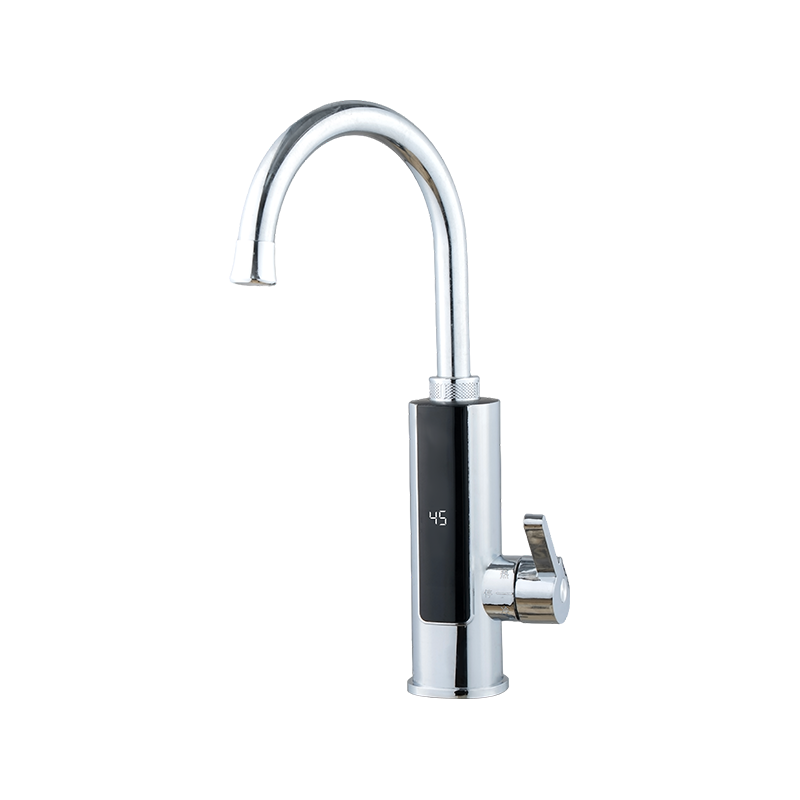
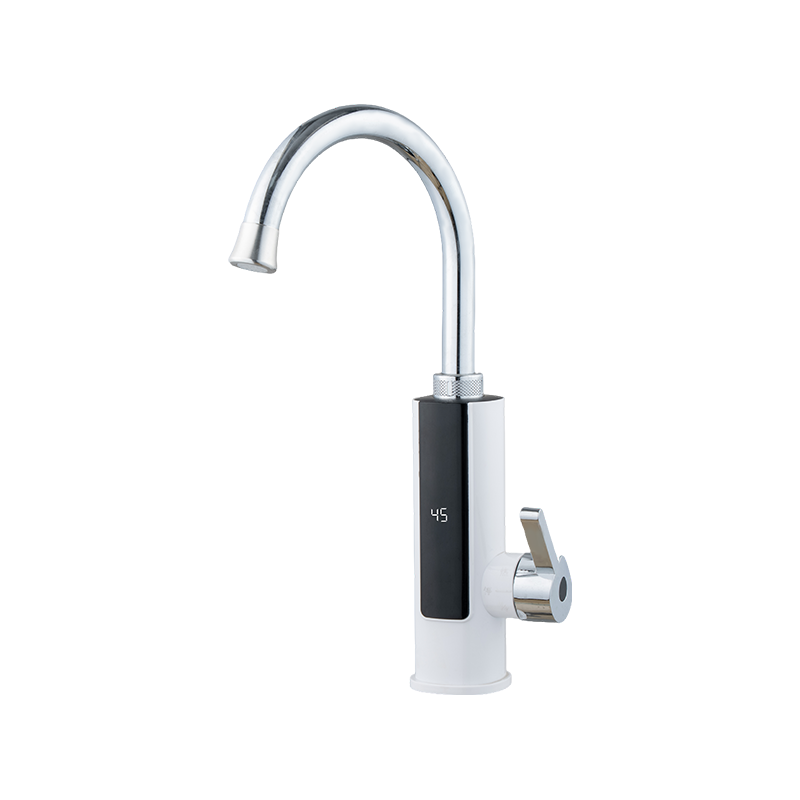
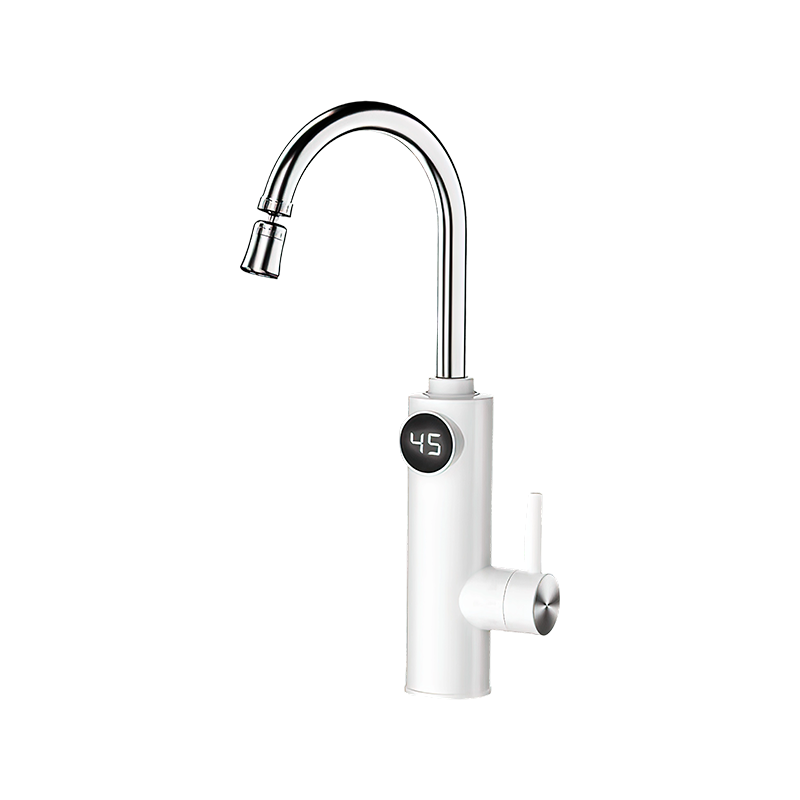
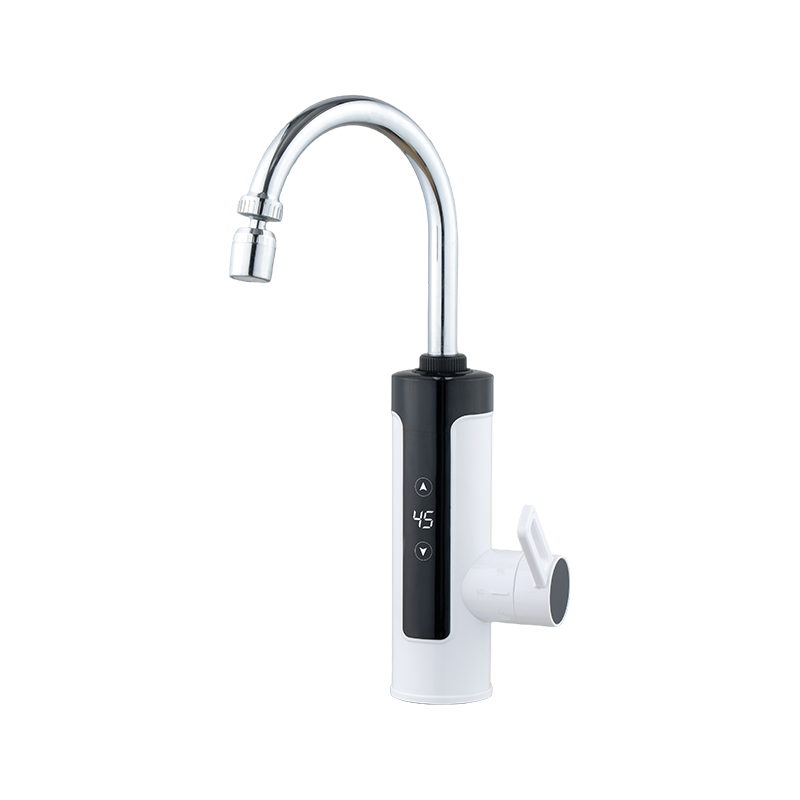
Kitchen models are usually designed with a taller gooseneck spout and a rotating base so the tap can swing between a sink bowl and a secondary basin. Many kitchen units include a mixing lever that lets the user blend heated and unheated water, along with a digital display showing the current outlet temperature.
Bathroom and Wash Basin Faucets
Bathroom-oriented units tend to have a lower profile spout and are frequently paired with a small LED temperature indicator on the body of the faucet rather than a full digital panel, keeping the footprint compact for wash basins and vanity counters.
Wall-Mounted Instant Units for Utility and Shower Points
Wall-mounted versions are built for utility rooms, laundry points, or supplementary shower connections. These typically use a higher wattage heating element to support a slightly larger flow rate while keeping the same tankless, quick-install format.
Digital Display Type
Shows real time outlet temperature and power level on an LED or LCD panel. Knob Control Type
Uses a manual rotary knob to adjust heating power in fixed steps, a simpler and lower cost configuration. Dual Outlet Type
Splits output between a spout and a handheld hose, useful for combined sink and rinse tasks. Under-Counter Type
Places the heating unit beneath the counter with only the spout visible above, for a cleaner countertop look.
| Type | Typical Location | Control Method | Common Power Range |
|---|---|---|---|
| Kitchen gooseneck faucet | Kitchen sink | Digital or lever | 3000W to 5500W |
| Wash basin faucet | Bathroom vanity | LED indicator | 3000W to 4500W |
| Wall-mounted utility faucet | Laundry, utility room | Knob or digital | 4000W to 6000W |
| Dual outlet faucet | Kitchen or utility sink | Digital | 3500W to 5500W |
Key takeaway: Matching the faucet type to the intended point of use, kitchen, bathroom, or utility, is the first step toward a successful quick free installation project.
How Instant Electric Faucets Work: Structure and Heating Principle
The core idea behind an instant electric faucet is simple: instead of storing hot water in a tank, the unit heats water only at the moment it flows through the faucet body. When the tap is opened, incoming cold water passes across a heating element inside a sealed heating chamber, and by the time the water reaches the spout it has already been raised to the selected temperature. Because there is no tank to fill or reheat, the water is available almost immediately, which is the main reason this category is marketed as an instant hot water faucet.
The internal structure generally includes several coordinated components working together in sequence.
- A flow sensor or micro switch that detects water movement and activates the heating circuit only while water is running, which helps limit standby power use.
- A ceramic or metal sheath heating element that transfers heat directly into the passing water stream inside a compact heating chamber.
- A thermal cut-off or temperature limiter that interrupts power if the water temperature or the element temperature exceeds a preset safety threshold.
- A grounding terminal and, on many models, a built-in leakage protection module that cuts power automatically if a current leak is detected.
- A control interface, either a rotary knob or a digital button panel, that lets the user select a heating level or a target outlet temperature.
Because the heating chamber is small and the flow rate through a single faucet is limited compared with a whole-house system, the electrical load required is far lower than what a central water heater would need, which is part of why these units can usually be installed on a standard household circuit rather than a dedicated high-capacity line. This is also why the outlet temperature on an instant faucet is closely tied to incoming water flow: reducing the flow rate at the tap generally raises the outlet temperature, while opening the tap fully lowers it, since the same heating power is being applied to a different volume of passing water.
Key takeaway: The absence of a storage tank, combined with flow-activated heating and built-in safety cut-offs, is what allows an instant electric faucet to deliver hot water on demand while keeping the installation footprint small.
Why Free and Quick Installation Matters for Buyers and Contractors
Installation time is one of the most practical differences between an instant electric faucet and a traditional storage water heater, and it is also one of the biggest reasons distributors position this category as a quick installation electric faucet solution. A tank-based electric heater generally requires wall mounting for the tank itself, a dedicated pressure relief line, and enough clearance for the tank body, while a gas storage heater adds venting and combustion safety requirements on top of that. An instant electric faucet, by contrast, connects to an existing water supply line and a nearby power outlet, with no tank to hang and no venting to plan.
This section looks at how installation time typically compares across these three common categories, based on general field installation observations rather than a single controlled study. The comparison is meant to illustrate the relative order of magnitude rather than an exact universal figure, since real installation time still depends on the condition of the existing plumbing, wall type, and whether any adapter fittings are needed. For contractors and distributors, shorter installation time translates directly into lower labor cost per unit installed, which is a meaningful consideration for rental property turnover, hospitality retrofits, and large multi-unit projects. For end users, a faster installation also means less disruption to the kitchen or bathroom during the changeover. The chart below summarizes this relative comparison in minutes.
Looking at the chart, the instant electric faucet consistently shows the shortest bar among the three categories, which reflects its tankless, plug-and-mount design. A standard tank electric heater typically requires roughly four to five times longer to install because of the additional tank mounting, bracket alignment, and pressure line work involved. A gas storage heater shows the longest typical installation window in this comparison, largely due to the added venting and combustion-safety checks that are part of a compliant gas installation. This gap matters most in projects where downtime is costly, such as occupied rental units, hotel guest rooms, or retail fit-outs where a plumber has only a narrow service window. For distributors serving small contractors, a product that a single technician can mount without a helper or specialized tools also reduces coordination overhead across multiple job sites in the same day. It is worth noting that the numbers shown are directional and representative of commonly reported field experience rather than results from one specific certified test, since site conditions such as existing wall material and pipe access will always shift the exact time up or down. Even accounting for that variability, the relative ordering, instant electric faucet fastest, tank heater next, gas storage heater slowest, is consistent with how these categories are generally described by plumbing distributors and installation guides. For B2B buyers stocking multiple SKUs, this installation-time advantage is frequently a stronger selling point in the field than any single spec sheet number, because installers can see and feel the time savings on the very first unit they mount. In short, the chart reinforces why the free and quick installation angle is not just a marketing phrase but a measurable operational advantage tied to the tankless design covered in the previous section.
Key takeaway: Removing the tank and the venting requirement is what allows an instant electric faucet to be mounted in a fraction of the time needed for tank or gas-based alternatives.
Selecting the Right Instant Electric Faucet for Your Application
Choosing the right model starts with matching the power rating and control type to the intended point of use, then checking that the local electrical supply and water pressure fall within the manufacturer's stated operating range. Buyers sourcing for kitchen use, bathroom use, or commercial washroom use will often need different combinations of wattage, spout style, and control interface, even though the underlying tankless heating principle is the same across the range.
Application Scenarios
|
Selection Tips
|
For wholesale and OEM buyers, it also helps to ask the manufacturer about certification scope relevant to the destination market, available color and spout finishes, and whether the control panel language and unit symbols can be adapted for the target country. A supplier that can support small customization requests alongside a standard compact electric water heater faucet line is generally easier to work with for multi-market distribution.
Key takeaway: Matching voltage, flow rate, and control type to the destination market is the most reliable way to avoid mismatched orders and post-sale complaints.
Performance Comparison: Instant Electric Faucet vs Traditional Tank Water Heater
Beyond installation time, buyers often want a broader picture of how an instant electric faucet compares with a traditional tank water heater across the factors that matter most in daily use. Five attributes are commonly used for this kind of comparison: installation speed, space efficiency, energy use flexibility, maintenance simplicity, and retrofit adaptability into an existing space. Each of these attributes reflects a different part of the ownership experience, from the initial setup to years of routine use. The radar chart below plots both categories on a relative scale from zero to ten across all five attributes at once, making it easier to see where each option is naturally stronger. As with the earlier installation-time comparison, the scores reflect general category-level positioning rather than a single certified benchmark test.
The chart shows the instant electric faucet forming a noticeably larger shape across most of the five axes, particularly installation speed and retrofit adaptability, which lines up with the tankless, plug-and-mount design discussed earlier in this article. Space efficiency also favors the instant electric faucet, since the entire heating unit sits within the faucet body or a small under-counter housing rather than requiring floor or wall space for a full tank. Maintenance simplicity is another area where the instant faucet shape extends further outward, largely because there is no large water volume sitting in storage that needs periodic tank flushing or anode inspection. The traditional tank heater shape is more balanced but generally smaller across these same axes, reflecting the added footprint, plumbing complexity, and maintenance routine that come with a storage-based system. Energy use flexibility shows the narrowest gap between the two categories, since both approaches can be paired with time-of-use habits, though the instant faucet has an advantage in that it draws power only while water is actively flowing rather than maintaining a stored volume at temperature around the clock. For buyers weighing a full water heater replacement against a targeted point-of-use upgrade, this radar comparison helps frame the decision less as a strict either-or choice and more as a question of which attributes matter most for the specific room or project. A single-point kitchen or bathroom upgrade, for example, often benefits more from the installation speed and space efficiency strengths shown here, while a whole-property hot water strategy may still use tank-based systems in parallel for larger simultaneous demand. It is worth repeating that these are relative, illustrative scores intended to visualize general category strengths side by side rather than results tied to one specific make or model. Even with that caveat, the overall pattern in the chart, an instant electric faucet performing strongly on speed, space, and maintenance while both approaches remain closer on energy flexibility, is consistent with how these two heating approaches are typically described in general water heating literature. This is one reason many contractors treat instant electric faucets as a practical complement to, rather than a full replacement for, an existing central hot water system.
Key takeaway: Instant electric faucets tend to outperform tank heaters on installation speed, space efficiency, and maintenance simplicity, while both approaches remain closer on energy use flexibility.
Adoption Trends for Compact Instant Water Heating Solutions
Interest in compact, quick-install water heating solutions has generally trended upward over the past several years, driven by a mix of factors that go beyond any single product feature. Growth in e-commerce distribution has made it easier for smaller distributors and even individual households to source and compare tankless faucet options directly, without relying only on local hardware retailers. Rental and short-term housing markets have also expanded in many regions, and property managers in that space tend to favor upgrades that can be installed and removed without major plumbing work. At the same time, renovation projects in older buildings, where adding a full tank water heater is often impractical due to space or structural constraints, have leaned more heavily on point-of-use solutions. The line chart below presents a relative interest index across recent years, illustrating this general upward direction rather than an exact market-share figure from a specific data provider.
Reading the line from left to right, the index climbs steadily each year without any sharp reversals, which suggests sustained rather than short-lived interest in this product category. The steepest single-year gains appear around 2021 and 2022, a period that broadly overlaps with increased attention to home renovation and remote living arrangements in many markets, though this trend line should be read as directional rather than as a precise causal measurement. By 2024, the index sits well above its 2019 starting point, indicating that awareness and adoption of quick-install electric faucets have grown meaningfully over a five-year span rather than plateauing early. This kind of sustained upward trend is typically a useful signal for distributors deciding whether to expand shelf space or online listings for this category, since it points toward continuing rather than fading demand. It also supports the case for manufacturers to keep investing in incremental improvements such as more precise digital temperature control and lower standby power draw, since a growing buyer base tends to reward differentiated features over time. For B2B buyers in export markets, a rising interest trend in the country of manufacture can be a useful leading indicator, since design and feature improvements developed for a growing domestic market often become available to international buyers shortly afterward. It is also worth noting that a relative index of this kind is most useful for spotting direction and pace of change, not for estimating an exact number of units sold, since it does not translate directly into absolute volume without additional market-specific data. Even with that limitation in mind, the consistent year-over-year climb shown here lines up with the broader shift toward compact, retrofit-friendly water heating solutions described throughout this article. Distributors evaluating whether to add or expand an instant electric faucet line can reasonably treat this kind of multi-year upward trend as one supporting data point among several, alongside local market research and direct customer feedback.
Key takeaway: Interest in compact, quick-install electric faucets has trended steadily upward over the past several years rather than showing a short-term spike.
Application Scenarios Breakdown for Instant Electric Faucets
Instant electric faucets are used across a range of settings, and understanding the typical split between these settings helps both distributors planning inventory and installers anticipating common customer questions. Based on how this product category is generally described by distributors and installation guides, four broad use cases account for most real-world deployments: kitchen use, bathroom or shower-adjacent use, utility or small commercial washroom use, and rental or retrofit projects. Each of these categories has slightly different priorities, with kitchens leaning toward digital temperature control and bathrooms leaning toward compact, low-profile housings. The donut chart below illustrates a typical distribution across these four categories, again presented as a representative pattern rather than a precise market census.
The largest single segment in this breakdown is kitchen use, which is consistent with the fact that kitchens are often the first room in a property where quick, reliable hot water is expected for dishwashing and food preparation. Bathroom and shower-adjacent use follows closely behind, reflecting how commonly these faucets are chosen for vanities and wash basins in properties without full central hot water systems. Utility and small commercial washroom use makes up a smaller but still meaningful share, covering settings such as workshop sinks, staff washrooms, and light commercial back-of-house areas where a full water heater installation would be disproportionate to the actual demand. Rental and retrofit projects form the smallest of the four segments shown here, but this category is disproportionately important for distributors because it represents recurring, cyclical demand tied to tenant turnover rather than a one-time purchase. Property managers overseeing multiple units often standardize on a single faucet model precisely because of the quick free installation advantage discussed earlier in this article, which allows maintenance staff to swap or repair units between tenants without scheduling a licensed plumber for every job. Looking across all four segments together, the common thread is that instant electric faucets tend to be selected wherever a fast, self-contained hot water solution is more practical than extending or upgrading a central system. This pattern also explains why manufacturers offer several faucet types, as covered earlier in the types and features section, rather than a single universal design, since kitchen, bathroom, utility, and rental scenarios each place slightly different priorities on control interface, spout shape, and housing size. For distributors building a product lineup, this breakdown suggests that carrying at least one kitchen-oriented model and one bathroom or utility-oriented model will cover the large majority of real-world customer requests. Recognizing which segment a given customer falls into, whether an individual homeowner or a property manager, also helps sales staff recommend the right control type and power rating without back-and-forth.
Key takeaway: Kitchen and bathroom use together account for the majority of instant electric faucet applications, with utility and rental retrofit projects forming smaller but strategically important segments.
Installation Guidelines and Safety Considerations
While the quick free installation design is a major advantage of this product category, it should still be installed carefully, and many manufacturers recommend that the electrical connection be handled by a qualified installer familiar with local wiring practices. The general installation sequence for a typical wall-mounted or countertop instant electric faucet follows a consistent order across most models.
- Shut off the water supply at the nearest valve before beginning any work on the existing faucet or plumbing connection.
- Remove the old faucet, if replacing one, and clean the mounting surface and supply line connectors.
- Mount the new faucet body and secure it according to the manufacturer's bracket or base fitting instructions.
- Connect the water supply line, checking that all fittings are seated correctly before restoring water pressure.
- Complete the electrical connection, confirming a proper grounding point and, where required, a dedicated leakage protection outlet.
- Turn the water supply back on and run the faucet briefly to check for leaks and confirm the heating function activates as expected.
From a safety standpoint, buyers should look for models that include a thermal cut-off, a grounding terminal, and, ideally, an integrated leakage protection function, all of which were described earlier in the structure and heating principle section. It is good practice to avoid using an extension cord for the power connection and to ensure the circuit supplying the faucet is not shared with other high-draw appliances. Households or facilities in areas with variable water pressure may also want to confirm the faucet's rated operating pressure range with the supplier before installation, since pressure that is too low can prevent the flow sensor from activating the heating element.
Key takeaway: Following the standard shut off, mount, connect, and test sequence, and confirming grounding and leakage protection are in place, supports a safe and reliable installation.
Maintenance Tips to Extend Product Lifespan
Because instant electric faucets do not hold a standing volume of water, their maintenance routine is generally lighter than a tank-based system, but a few regular checks help keep performance consistent over time.
- Clean or replace the inlet filter screen periodically to prevent sediment from restricting flow into the heating chamber.
- Descale the heating chamber occasionally in areas with hard water, following the manufacturer's recommended method and interval.
- Inspect the power cord and plug regularly for any signs of wear, and replace immediately if damage is found.
- Test the leakage protection function, if the model includes a test button, on a routine schedule to confirm it is working correctly.
- Check the spout and connection fittings for slow leaks, which can indicate a worn seal that should be replaced.
Following a simple seasonal check, especially before periods of heavier use, helps catch minor issues such as a partially clogged filter before they affect heating performance. For rental properties and commercial washrooms, keeping a small stock of common replacement parts such as filter screens and seals can reduce downtime between tenant turnovers.
Key takeaway: Routine filter cleaning, occasional descaling, and periodic safety function checks are usually all that is needed to keep an instant electric faucet performing reliably.
Choosing a Reliable Instant Electric Faucet Manufacturer and Supplier
For distributors and OEM buyers, choosing an instant electric faucet manufacturer is as important as choosing the product itself, since consistent quality control and dependable supply capacity directly affect how a product line performs after it reaches the market. Buyers generally look for a few things when evaluating a potential electric faucet supplier: production scale sufficient to support recurring orders, a track record of working with established retail or brand partners, in-house sales and after-sales support, and the flexibility to support both branded and private-label orders.
Ningbo Maiteng Electric Appliance Co., Ltd. has been focused on the electric water heating faucet category since 2011, operating an ISO9001 and CE certified facility that spans 10,000 square meters with around 200 employees and an annual output of approximately 2 million units. The company's structure covers sales, e-commerce, production, after-sales support, warehousing, and quality inspection under one roof, which supports both OEM production runs and its own branded product lines. Over the years, Ningbo Maiteng has built strategic supply partnerships with well known domestic appliance brands, while also developing its own labels, including Dongri Le and Aituosheng, alongside a newer brand, HELLO DREAM, introduced in 2019. Distribution runs through a dual model combining direct operation and third-party distribution across multiple Tmall stores, Pinduoduo stores, Taobao enterprise stores, and an Alibaba wholesale platform store, supporting steady order volume across different buyer types. In 2023, the company established a dedicated foreign trade department to serve international wholesale instant electric faucet and OEM electric faucet buyers more directly, reflecting a broader push to support export markets alongside its established domestic business. For B2B buyers evaluating a long-term sourcing partner for free installation electric faucet product lines, this combination of manufacturing scale, brand experience, and dedicated export support is generally a practical starting point for due diligence.
Key takeaway: Production scale, certification, established brand partnerships, and dedicated export support are practical indicators to check when selecting an instant electric faucet manufacturer.
Frequently Asked Questions
Q1: Does an instant electric faucet require a separate storage tank?No. The heating element is built into the faucet body itself, so water is heated only as it passes through, which is why the category is described as tankless. |
Q2: How long does installation usually take?Installation typically takes about 30 minutes for a straightforward replacement, since the unit connects directly to an existing water line and a nearby power source without tank mounting or venting work. |
Q3: What voltage options are available?Instant electric faucets are commonly produced in both 110V and 220V configurations to match different regional electrical standards, so buyers should confirm the correct voltage for their destination market before ordering. |
Q4: Are these faucets suitable for both kitchen and bathroom use?Yes. Kitchen models typically use a taller gooseneck spout with digital control, while bathroom models use a lower profile design, so the right choice depends on the intended point of use covered earlier in this article. |
Q5: What safety features should buyers look for?Key features include a thermal cut-off, a grounding terminal, and, where available, an integrated leakage protection module that cuts power automatically if a current leak is detected. |
Q6: Can manufacturers support OEM or private label orders?Many established manufacturers, including those with dedicated foreign trade departments, support both OEM production and private label branding alongside their own product lines for wholesale and distribution buyers. |



NINGBO MAITENG ELECTRIC APPLIANCE CO., LTD. integrates production and sales. The company adopts a dual model of self-management and distribution sales.
- CONTACT INFO
-
NO.8 Yaobei Avenue,Simen Town, Yuyao City, Ningbo City, Zhejiang, China
-
 +86-159 5821 2132
-
 +86-574-62178444
-
 +86-159 5821 2132
-
 [email protected]
[email protected]
-
- SCAN IT
-
Mobile terminal

