


 English
  Español
How to Get Rid of Calcium Buildup on Faucet: Vinegar Soaks, Descalers and Prevention
Date:2026-09-01
Content
- 1 Why Faucets Get Calcium Buildup in Hard Water Homes
- 2 How to Get Rid of Calcium Buildup on Faucet: Step-by-Step Methods
- 3 How to Clean an Electric Heating Faucet Without Damage
- 4 Preventing Calcium Buildup on Faucet Surfaces
- 5 When to Repair or Replace a Scale-Damaged Faucet
- 6 A Faucet Maintenance Schedule That Keeps Scale Away
- 7 Calcium Buildup on Faucet: Frequently Asked Questions
- 7.1 How do I get rid of heavy calcium buildup on a faucet fast?
- 7.2 Will vinegar damage my faucet finish?
- 7.3 How do I clean the inside of the aerator when the flow is weak?
- 7.4 Can I descale an electric hot water tap the same way as a normal faucet?
- 7.5 Does a water softener really stop faucet calcium deposits?
- 7.6 Why does the white crust keep coming back within days of cleaning?
- 8 More Faucet Care and Buying Resources
That chalky white crust creeping around the base of your tap, the one that clogs the aerator until the spray shoots sideways, is calcium carbonate left behind by hard water, and it will not come off with ordinary dish soap. The good news is that learning how to get rid of calcium buildup on faucet bodies, spouts and aerators mostly comes down to one reliable move: a warm white vinegar soak that dissolves most deposits in under an hour. Thicker, layered crust usually needs citric acid or a clingy commercial descaling gel, and a plastic bag secured with a rubber band will hold the solution against curved spouts while it works. Electric heating taps need a gentler, damp-cloth approach so that no liquid reaches the electronics. Long term, wiping the faucet dry after use and softening very hard water matter more than any cleaner, because they stop the deposits from forming in the first place.
This guide covers the science in plain language, step-by-step removal methods for every part of the faucet, safe cleaning around instant hot water taps, prevention habits that actually hold, and the warning signs that tell you a faucet is past saving. As a manufacturer of instant electric water heating faucets, we handle these surfaces in testing every day, and the advice below reflects what genuinely works in hard water households rather than what simply sounds good on a label.
Key point: warm white vinegar dissolves most calcium buildup on faucet surfaces in under an hour, but preventing the deposits with dry-wipe habits and softened water is what keeps them gone.
Why Faucets Get Calcium Buildup in Hard Water Homes
Rainwater starts out soft, but as it moves through soil and rock it absorbs carbon dioxide and dissolved minerals, mainly calcium and magnesium. That slightly acidic water dissolves limestone as it travels, which is why supplies in limestone regions arrive at your home carrying dissolved calcium bicarbonate. The mineral stays invisible while it is dissolved in moving water. The trouble begins on any surface where water sits, evaporates, or gets heated.
When a droplet dries on the spout, the water leaves but the calcium and magnesium stay behind, bonding into the hard white crust you can scrape with a fingernail. Heat speeds the process dramatically, because warmth drives carbon dioxide out of solution and forces the bicarbonate to convert into insoluble calcium carbonate, which is the same reaction that coats a kettle element. This is why faucet bases, aerators and the outlets of instant heating taps collect scale faster than almost any other fixture in the house.
How Hard Is Your Water?
How often you fight scale depends on one number: the hardness of your supply water. Utilities report hardness as milligrams per liter (mg/L) of dissolved calcium and magnesium, or sometimes as grains per gallon. The widely used classification places soft water at 0 to 60 mg/L, moderately hard water at 61 to 120 mg/L, hard water at 121 to 180 mg/L, and very hard water above 180 mg/L. Your utility's annual water quality report, or an inexpensive test strip, will tell you which bracket your home falls into. The chart below lines up the four brackets so you can match your cleaning and prevention routine to real conditions instead of guesswork.
Read the chart as a maintenance forecast rather than a lab report. In genuinely soft water, at the left edge, most faucets only show faint spots after water dries, and a weekly wipe keeps them invisible. Between 61 and 120 mg/L, crust becomes noticeable within a couple of weeks on wet surfaces, but a monthly vinegar soak is usually enough to stay ahead of it. From 121 to 180 mg/L, the hard bracket, visible rings form within days around the base and inside aerators, and spray patterns start to break up. Above 180 mg/L, the very hard bracket, a faucet that stays wet overnight can grow a fresh film by morning. If your report uses grains per gallon, multiply by 17.1 to convert to mg/L, so 10 grains equals roughly 171 mg/L and lands near the top of the hard bracket. Well water often sits at the extreme right of the chart, especially where aquifers run through limestone or chalk. Municipal supplies vary too, sometimes from block to block, depending on blending sources and treatment. Heat multiplies the problem at every level, which is why the outlet of an instant heating tap scales faster than a cold bathroom tap. The further right your water sits, the more your prevention budget should shift toward softening or filtration rather than stronger cleaners. Matching your routine to your actual hardness is what separates a five-minute weekly habit from an hour of scrubbing every quarter.
What the White Crust Is Actually Made Of
The crust on your faucet is not dirt, soap scum, or a defect in the finish, because it is rock your water left behind. Laboratory analyses of household limescale consistently identify calcium carbonate as the dominant compound. Magnesium carbonates and hydroxides normally make up most of the remainder. Silica, iron traces and other dissolved solids fill the last few percent, sometimes tinting deposits pink, brown or grey. The donut chart below shows the typical split you can expect in a hard water home.
Typical limescale
Calcium carbonate: about 88 percent
Magnesium compounds: about 8 percent
Silica and trace minerals: about 4 percent
That heavy calcium share explains why acid is the universal answer to faucet scale. Acids react with carbonates and release carbon dioxide, which is the fizzing you see when vinegar touches a fresh deposit, because the crust is literally breaking down into soluble salts. Distilled white vinegar carries about 5 percent acetic acid, enough for routine crust when given 30 to 60 minutes of contact. Citric acid works on the same chemistry but usually cuts through thick, layered scale faster and with far less odor. Magnesium compounds dissolve in the same acids, just a little more slowly, so they rarely need a separate treatment. Silica is the stubborn fraction, which is why some older deposits need a second soak or a gentle scrub before they fully lift. Iron traces explain the rust-colored staining that sometimes appears alongside white scale and calls for a dedicated rust remover. Heat drives carbon dioxide out of the water, forcing carbonate to precipitate fastest on hot surfaces. That is why kettle elements, heating chambers and the outlets of instant hot water taps grow scale quicker than cold fixtures. It also explains the chalky, powdery feel of the crust: you are essentially looking at re-formed limestone. Because the deposit is mineral rather than grease, abrasive powders add nothing but scratches. Acid, contact time and a soft brush remove everything the chemistry put there.
Key point: scale is re-formed limestone, dominated by calcium carbonate, so acid dissolves it and heat accelerates it, which is why hot spots like heating taps need the most attention.
How to Get Rid of Calcium Buildup on Faucet: Step-by-Step Methods
Start with vinegar before you buy anything, because for the majority of faucets a 50/50 warm vinegar wrap dissolves the crust without specialty chemicals. Escalate to citric acid or a commercial descaling gel only when deposits are layered or the vinegar method has stalled. Work through the steps below in order, and give the acid time to work, since scrubbing harder never substitutes for contact time.
The White Vinegar Soak: The Default Method
Vinegar earns its place as the standard treatment because acetic acid reacts directly with calcium carbonate, softening the crust until a toothbrush finishes the job. Here is the routine that works on spouts, bases, handles and around aerator seams:
- Mix equal parts distilled white vinegar and warm water, warm but never boiling, so plastics and rubber seals are not stressed.
- Soak a clean rag in the solution, or fill a small plastic bag with it for curved spouts.
- Press the rag over the affected areas, or slip the bag over the spout and secure it with a rubber band so the aerator sits fully submerged.
- Leave everything in place for 30 to 60 minutes, re-wetting the rag halfway through if it starts to dry out.
- Scrub the softened crust with an old toothbrush, working around the base and the aerator seam where deposits collect first.
- Rinse with warm water, run the tap for a few seconds, then dry with a microfiber cloth for a spot-free finish.
Citric Acid for Thick, Layered Scale
When crust has built up in layers over months, citric acid is the faster, food-safe option. Dissolve 1 to 2 tablespoons of citric acid powder in a cup of warm water, apply it with the same bag-and-rubber-band trick, and let it dwell for 15 to 30 minutes. It produces almost no odor compared with vinegar, which makes it the better choice for open kitchens and rental showings. Rinse thoroughly afterward, because leaving any acid to dry on specialty finishes can dull them.
Baking Soda Paste for Stubborn Patches
For small, hardened patches that survive soaking, make a paste of baking soda and a few drops of water and scrub in gentle circles with a soft cloth. Apply it after an acid soak rather than mixing it into the acid, because combining them in one step neutralizes the acid you just paid for. The paste acts as a very mild abrasive, so it belongs on durable chrome and stainless, not on coated or plated specialty finishes.
Commercial Descaling Gels
Gel descaling products cling to vertical surfaces where vinegar simply runs off, which makes them useful on faucet bodies and shower columns. Follow the contact time on the label rather than letting the product dry in place, confirm that the formula is rated safe for your finish, and rinse generously. Never combine descalers with bleach or other cleaners, since mixing household chemicals can release dangerous gases.
Cleaning the Aerator and Spray Face
Aerator screens trap the finest particles of scale, and they are usually the reason a faucet suddenly sprays sideways or loses pressure. The fix takes less than an hour:
- Unscrew the aerator from the tip of the spout, using pliers wrapped in tape if it is tight.
- Soak the parts in the 50/50 vinegar solution for 30 to 60 minutes.
- Brush the screen gently and clear clogged holes with a straight pin.
- Rinse, reassemble by hand, and run the water briefly to flush any loosened grit.
Quick Reference: Descaling by Finish
Faucet finishes respond differently to acids and abrasion, so match the method to the surface before you start soaking.
Chrome
Handles full vinegar soaks well; rinse and buff dry to restore the shine.
Brushed nickel
Use diluted vinegar, keep dwells short, and always wipe along the grain.
Matte black and coated
Dilute vinegar 1:1, limit to 10 minutes, and never use scrub pads.
Stainless steel
Vinegar is safe; work along the grain and dry to prevent water marks.
PVD and gold tones
Try mild soapy water first; use only brief diluted vinegar if scale remains.
| Method | Typical contact time | Best for | Key caution |
|---|---|---|---|
| Vinegar soak | 30 to 60 minutes | Everyday crust on spouts, bases and handles | Keep off natural stone counters; never mix with bleach |
| Citric acid solution | 15 to 30 minutes | Thick, layered scale and heavy aerator clogging | Rinse well; can dull some specialty finishes if left |
| Baking soda paste | 5 to 10 minutes of gentle scrubbing | Small stubborn patches on durable finishes | Mildly abrasive, so use soft circles only |
| Descaling gel | Per label, often 5 to 15 minutes | Vertical surfaces where liquids run off | Confirm finish compatibility before first use |
Key point: for most faucets, a 50/50 warm vinegar wrap held in place for up to an hour removes calcium buildup without any specialty product at all.
How to Clean an Electric Heating Faucet Without Damage
Instant electric water heating taps need a different routine from ordinary faucets, because the body houses a heating chamber, electronics, a display and sealed electrical connections. The outside still collects scale exactly like any other tap, and you should absolutely clean it, but the rule is simple: damp cloth on the outside, nothing wet on the inside. Follow this sequence every time.
- Switch off and unplug the unit at the outlet before any cleaning begins.
- Let the tap and the water run cool, since hot surfaces flash-dry cleaner residue into new deposits.
- Wipe the body with a damp microfiber cloth and a drop of mild dish soap.
- For scale on the housing, use a cloth wrung out of the 50/50 vinegar solution, damp but never dripping.
- Keep every liquid away from the LED display, the vents, the cord entry and the inlet and outlet fittings.
- Clean the outlet face with a vinegar-dampened cloth, then run warm water for a minute to flush the nozzle.
- Rinse the cloth, wipe everything down again, and dry the unit completely before restoring power.
Never immerse the tap, never spray it with a bottle, and never pour descaler into the unit, because liquid reaching the heating chamber or circuitry can cause failures that no warranty covers. Internal scale is a different matter from surface crust: minerals precipitate fastest on hot metal, so the chamber gradually accumulates deposits even in well-maintained homes. You will notice it as slower heat-up, fluctuating outlet temperature, or the over-temperature protector cutting in more often. That is a job for the flushing procedure in the manual or a qualified technician, not a household acid pour.
Design choices make a real difference here. Stainless steel bodies and heating chambers resist corrosion and repeated wipe-downs far better than coated light alloys, thermostatic control keeps surface temperatures stable, and protective features such as dry-burn protection and leakage protection matter in humid bathrooms. For bathroom installations where splashing and steam are constant, a stainless anti-corrosion model with a built-in heater is the configuration we recommend most often to hard water customers.
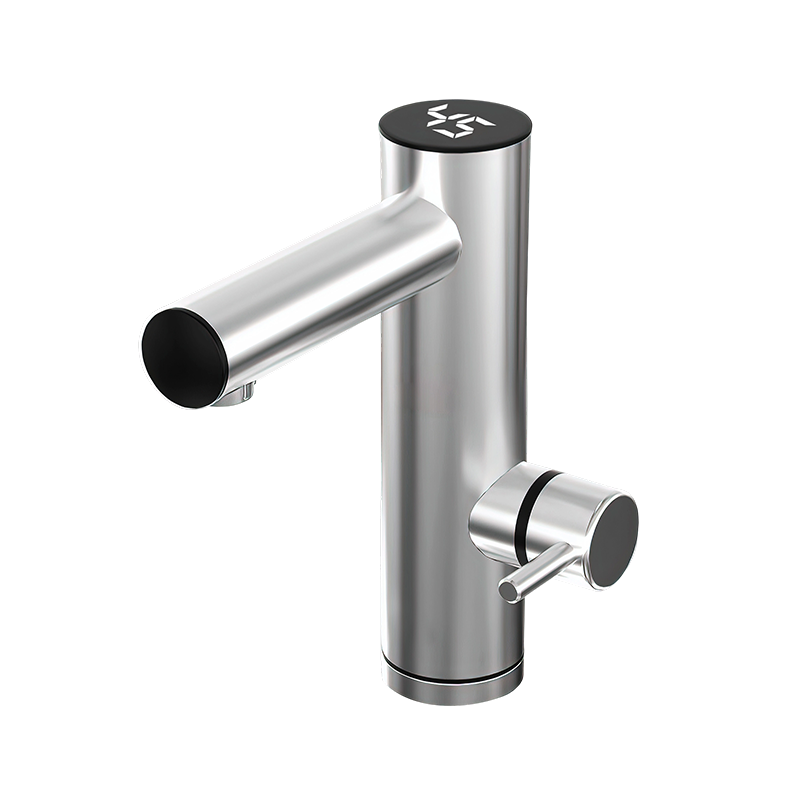 Stainless Steel Anti-Corrosion Electric Water Tap with Built-In HeaterA 3400W stainless steel instant heating faucet with LED temperature display and multiple protections including overheating, anti-leakage, and water-electricity isolation. Recommended for humid bathrooms, since its corrosion-resistant body holds up better against splashing, steam, and hard water scale.View Product →
Key point: on electric heating taps, clean only the outside with a damp cloth and let the design, thermostatic control and protective cutoffs handle the inside; never pour liquid descaler into the unit.
Preventing Calcium Buildup on Faucet Surfaces
Prevention is a two-front problem: keep water from sitting and evaporating on the faucet, and reduce the minerals the water carries. The first front costs a towel and thirty seconds a day, while the second costs equipment and a filter cartridge now and then. Together they can cut your descaling frequency from weekly to a couple of times a year, even in very hard regions.
Start with the habits, because they are free and they address the exact mechanism that forms crust:
- Wipe the faucet dry after the last use of the day, since evaporation is what leaves the minerals behind.
- Wipe the body and base once a week with a cloth dampened in the 50/50 vinegar solution.
- Repair drips promptly, because a leaking spout deposits a fresh mineral layer every time it evaporates.
- Check the aerator monthly in hard water homes, before weak flow forces a deep clean.
- Run instant heating taps at comfortable settings instead of maximum output around the clock, since hotter surfaces collect scale faster.
For the water itself, ion-exchange softeners remove calcium and magnesium entirely and are the definitive fix, at the highest upfront cost. Scale-inhibiting whole-house filters are cheaper and partially effective, buying you longer intervals between cleans. Point-of-use filtration at the tap sits in between and is the practical answer for renters and for kitchens, where the same filtered line protects drinking water and the faucet at once. Filtration at the tap does double duty for instant heating faucets, because cleaner feed water slows internal scale on the heating element as well as crust on the spout, which extends the working life of the whole unit.
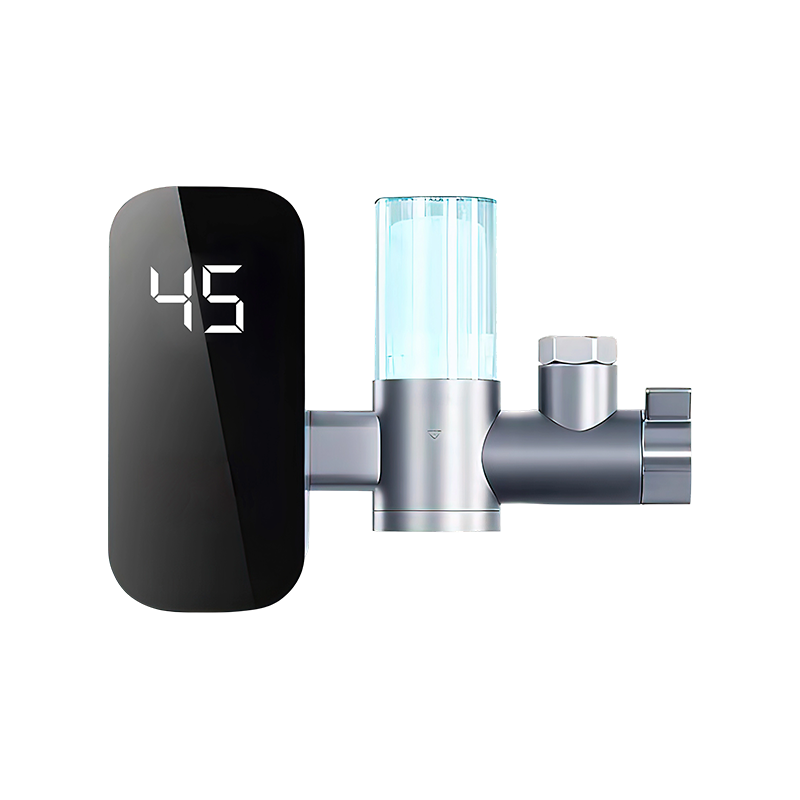 Built-In Filtration Electric Kitchen Heating TapThis ABS instant hot water faucet features a 6-layer built-in filtration system, so the same filtered line protects drinking water and slows internal scale on the heating element. A practical point-of-use answer for kitchens and renters in hard water areas.View Product →
Key point: prevention beats scrubbing every time, so dry the faucet after use, wipe with vinegar weekly, and if your water tests very hard, soften or filter at the point of use.
When to Repair or Replace a Scale-Damaged Faucet
Cleaning has limits, and pushing past them wastes hours on a faucet that will never look or perform right again. Scale does not just sit on the surface; over years it works into plating pores, valve seats, seals and heating chambers, and at that stage replacement is cheaper than continued fighting. Watch for these signs:
- Chrome plating that is pitted, flaking or bubbling, because once the base metal shows, trapped scale accelerates corrosion.
- Crust that regrows within days despite regular cleaning and drying.
- A persistent leak at the base or around the cartridge that keeps feeding new deposits.
- Aerator threads that no longer grip, or a spout that wobbles at the mount.
- On electric taps: noticeably slower heat-up, unstable temperature, or frequent cutoffs from the protection circuit.
None of these reverse with cleaning, and on an electric heating tap the last sign usually means heavy internal scale or a tired element. Before you spend another weekend scrubbing, compare the cost of a replacement against the value of your time and the risk to the finish you are trying to save.
What to Look For in a Scale-Friendly Replacement
If replacement is on the table, choose features specifically suited to hard water: a stainless steel body and heating chamber, thermostatic temperature control, dry-burn and over-temperature protection, leakage protection, a sealed display, and an aerator you can unscrew and soak without tools. These are the same specifications buyers in hard water markets ask for first, because they decide how the faucet behaves after year two, not just on day one.
For distributors and project buyers, this is also where supplier selection matters as much as product selection. When you evaluate an instant faucet manufacturer, supplier or wholesaler, ask specifically about heating chamber material, descaling and endurance test data, protection features and waterproof ratings, and whether the factory offers OEM and ODM customization such as built-in filtration or custom displays. Certifications like ISO9001 and CE, an in-house quality inspection team and stable annual capacity are the practical signals that a supplier can support repeat orders without quality drift.
The two main body materials divide exactly along these lines, and the table below summarizes the trade-offs we discuss with wholesale buyers:
ABS engineering plastic taps
|
Stainless steel taps
|
In very hard water, our own engineering team leans toward stainless bodies with thermostatic control, because constant temperature reduces surface overheating and stable control masks the gradual efficiency loss that scale would otherwise cause at the tap.
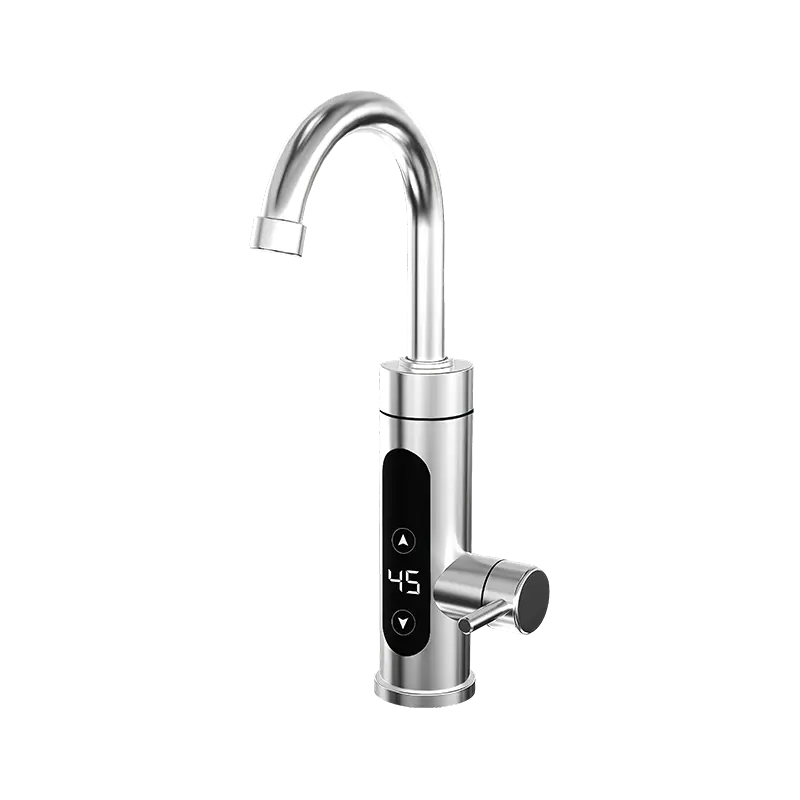 Constant-Temperature Stainless Steel Electric Hot Water FaucetA 3400W stainless steel faucet with frequency conversion thermostatic control and 360° rotatable spout. Stable temperature reduces surface overheating and masks gradual efficiency loss from scale, making it a sensible pick for very hard water homes.View Product →
Key point: if chrome is pitted or an electric tap heats slowly, cleaning is only delaying the inevitable, so choose a stainless, thermostatically controlled model rated for hard water.
A Faucet Maintenance Schedule That Keeps Scale Away
Cleaning on a schedule costs minutes, while cleaning after neglect costs an hour and risks the finish. Anchor the tasks below to your hardness bracket from the chart earlier in this guide: soft water homes can stretch the intervals, while very hard homes should treat them as minimums rather than targets. The rhythm matters more than the products, because fresh scale wipes off in seconds while month-old crust needs a soak.
| Frequency | Task | Why it matters |
|---|---|---|
| Daily | Wipe the faucet dry after the last use of the day | Evaporation is what leaves minerals behind; no droplets, no deposits |
| Weekly | Wipe the body and base with a 50/50 vinegar and water cloth | Dissolves the fresh film before it hardens into crust |
| Monthly | Soak the aerator and check the inlet screen on heating taps | Keeps flow strong and the spray pattern even |
| Quarterly | Wrap the spout and base in vinegar for a deep soak | Removes layered scale before it pits the plating |
| Annually | Inspect seals and O-rings; follow the manual for heating tap nozzle care | Prevents drips that concentrate minerals and feed new scale |
Two adjustments make the schedule smarter. First, pair it with your utility's seasonal report, because hardness often shifts when suppliers blend sources. Second, put the aerator soak on the same calendar as your smoke alarm battery check, since the two take the same five minutes and are forgotten at the same rate.
Key point: five minutes of weekly maintenance prevents the hour-long scrubbing sessions that heavy scale demands later.
Calcium Buildup on Faucet: Frequently Asked Questions
These are the questions homeowners, installers and wholesale buyers ask us most often about faucet scale, with straight answers based on workshop and field experience.
How do I get rid of heavy calcium buildup on a faucet fast?Wrap the affected area in a 50/50 solution of warm water and white vinegar for a full hour using the bag-and-rubber-band method, then brush and rinse. For truly thick layers, repeat the soak twice or step up to a citric acid solution with 15 to 30 minutes of dwell time per round. Two or three gentle acid cycles always beat one aggressive scraping session, because scraping is what permanently damages plating. Finish with the aerator removed and soaked, since that is where the worst accumulation hides. |
Will vinegar damage my faucet finish?Chrome and stainless steel tolerate diluted vinegar well when you rinse and dry afterward. Long dwells can dull lacquered, matte black, oil-rubbed and PVD gold finishes, so dilute 1:1 with water, limit contact to about 10 minutes, and test on a hidden spot first. Never use steel wool or abrasive powders on any finish, and protect natural stone countertops below the faucet, since vinegar etches marble and limestone. |
How do I clean the inside of the aerator when the flow is weak?Unscrew the aerator from the spout tip, soak the parts in a 50/50 vinegar solution for 30 to 60 minutes, brush the screen with an old toothbrush, and poke clogged holes clear with a straight pin. Reverse-flush it under the tap before reinstalling by hand. If the plastic screen is warped or the mesh is corroded, replacement inserts cost very little and screw straight into the existing housing. |
Can I descale an electric hot water tap the same way as a normal faucet?No, and the difference matters. Power off and unplug first, then clean only the exterior with a damp cloth or a well-wrung vinegar cloth, keeping liquid away from the display, vents and fittings. Never immerse the unit, spray it, or pour descaler into the heating chamber. Internal scale shows up as slower heating or temperature swings and should be handled through the manual's flushing procedure or by a qualified technician, ideally on a model designed with thermostatic control and dry-burn protection from the start. |
Does a water softener really stop faucet calcium deposits?Yes. Ion-exchange softeners remove the calcium and magnesium before the water reaches the tap, so there is nothing left to precipitate, and the white crust and spots essentially disappear. Scale-inhibiting filters are a cheaper middle ground that reduces rather than eliminates buildup, and point-of-use faucet filters protect a single tap, which suits renters and kitchens. Whatever you choose, keep the wipe-dry habit, because even softened water leaves spots if droplets evaporate on the chrome. |
Why does the white crust keep coming back within days of cleaning?Cleaning removes the deposit but not the cause. Fast regrowth means your hardness is above roughly 180 mg/L, water is left standing and evaporating on the fixture, or a slow drip is continuously laying down fresh minerals as it dries. Add the daily wipe-dry habit, a weekly vinegar wipe, and either a softener or a point-of-use filter, and also check the spout for a drip you may have stopped noticing. Fix all three conditions and regrowth slows from days to months. |
Key point: cleaning removes the symptom, while wiping dry, softening hard water and fixing drips remove the cause.
More Faucet Care and Buying Resources
If you are weighing an upgrade toward an instant heating tap, or sourcing one for a retail line or project pipeline, these resources are a good next step:
- Are electric water faucets easy to use? A practical look at daily performance
- Contact our team for quotes, OEM and ODM projects, or wholesale supply inquiries
As a direct manufacturer of instant electric water heating faucets with OEM and ODM support, wholesale programs and independent in-house quality inspection, we welcome buyers and end users alike to reach us through the contact page, and factory visits are always open to partners who want to see production and testing firsthand.
Key point: for hard water projects, sourcing directly from an experienced instant-heating faucet manufacturer gives you material and feature options that retail shelves rarely offer.
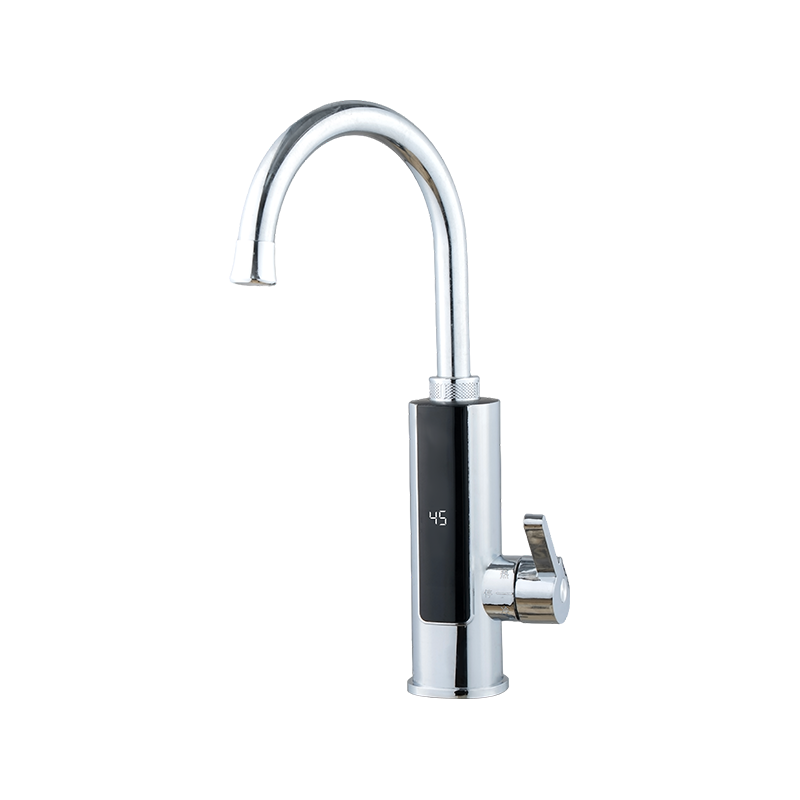



NINGBO MAITENG ELECTRIC APPLIANCE CO., LTD. integrates production and sales. The company adopts a dual model of self-management and distribution sales.
- CONTACT INFO
-
NO.8 Yaobei Avenue,Simen Town, Yuyao City, Ningbo City, Zhejiang, China
-
 +86-159 5821 2132
-
 +86-574-62178444
-
 +86-159 5821 2132
-
 [email protected]
[email protected]
-
- SCAN IT
-
Mobile terminal

