


 English
  Español
How to Clean the Cartridge Inside a Single Handle Bathroom Faucet: Step-by-Step
Date:2026-09-08
Content
- 1 What Is Inside a Single Handle Bathroom Faucet?
- 2 Six Signs That the Cartridge Needs Cleaning
- 3 Why Cartridge Problems Build Up: Common Causes at a Glance
- 4 How to Clean the Cartridge Inside a Single Handle Bathroom Faucet
- 5 Clean or Replace? How to Decide
- 6 Maintenance Tips to Keep the Cartridge Clean Longer
- 7 What Wholesalers, Suppliers, and Maintenance Teams Should Look For
- 8 Frequently Asked Questions
- 8.1 How often should I clean the cartridge inside a single handle bathroom faucet?
- 8.2 Can I clean the cartridge without turning off the water supply?
- 8.3 Is vinegar safe for all cartridge materials?
- 8.4 My faucet still leaks after cleaning. What should I do next?
- 8.5 Do instant electric bathroom faucets have a cartridge that needs cleaning?
- 8.6 How do I know which replacement cartridge to buy?
- 9 Useful Resources and More Reading
You lift the handle of the bathroom faucet, and the water arrives with noticeably less force than it did a few weeks ago. The stream is thinner, the temperature drifts between hot and cold, and the lever makes a faint scraping sound as it moves. Before booking a plumber or ordering a new fixture, there is one step you should try first: clean the cartridge inside the single handle bathroom faucet. A cartridge coated with mineral scale or clogged with fine debris is the most common reason a faucet loses its smooth operation, and cleaning it takes about fifteen minutes with tools most households already own. This guide explains what the cartridge does, how to remove and clean it safely, when cleaning is no longer enough, and how to keep the problem from returning.
These instructions come from a manufacturing perspective. Our factory has designed and produced instant electric water heating faucets for more than ten years, and we see the same pattern in service cases and customer inquiries: water quality, rather than component complexity, causes most performance failures. The cartridge, the inlet filter, and the rubber seals are the parts that need attention in conventional faucets and electric faucets alike.
Key takeaway: A scaled or dirty cartridge is the most common cause of a single handle bathroom faucet dripping, losing flow, or producing unstable water temperature. Cleaning it first solves most problems without replacement.
What Is Inside a Single Handle Bathroom Faucet?
A single handle bathroom faucet relies on one central cartridge to control both flow and temperature. The cartridge sits inside the valve body directly below the handle. When you lift the lever, the stem inside the cartridge raises or rotates a pair of ceramic discs. When you turn the lever left or right, the discs shift the proportion of hot and cold water entering the mixing chamber. Two polished ceramic discs form the heart of the design; their flat surfaces slide against each other with only a thin film of water between them.
Because the sealing faces are mechanical, even a small amount of sand, rust, or scale can scratch the ceramic or hold the faces apart. That is why the first symptom of a dirty cartridge is usually a slow drip rather than a dramatic failure. Cartridges also contain O-rings and rubber seals that keep water inside the valve body. Over time, these seals harden or collect a mineral film, and the handle begins to feel stiff or noisy.
| Cartridge type | Common applications | Cleaning difficulty | Typical service life |
|---|---|---|---|
| Ceramic disc | Modern single handle faucets | Moderate | 8-12 years |
| Ball type | Older single lever faucets | Moderate | 5-8 years |
| Compression | Older two handle faucets | Low | 4-6 years |
| Integrated electric valve | Instant electric faucets | Moderate, with inlet filter attention | Depends on water quality |
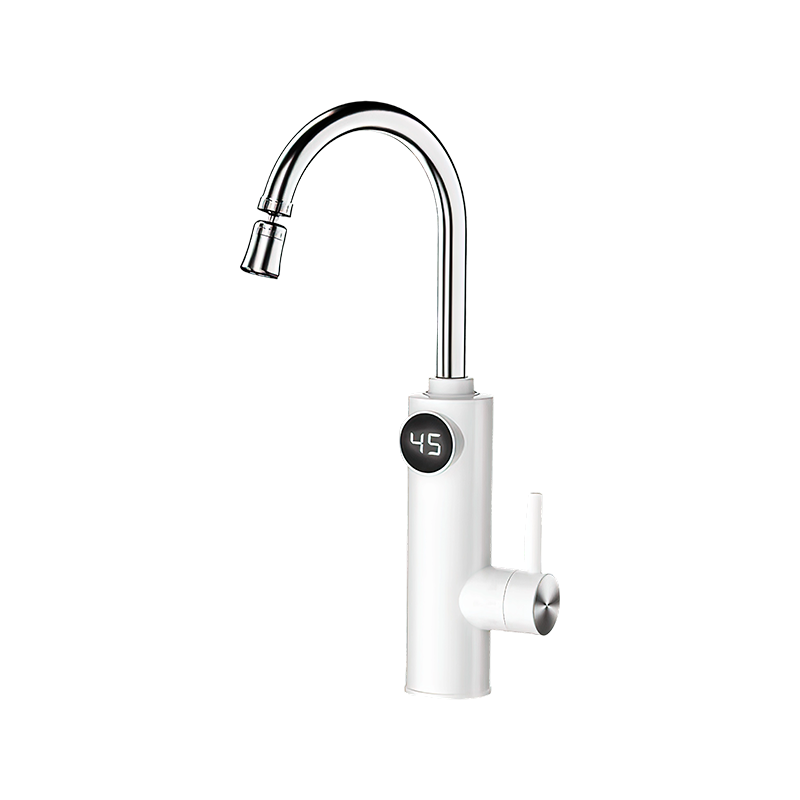
The same principle applies to instant electric faucets, with one addition: water also passes through a heating chamber and an inlet filter. In our electric bathroom faucets, the ceramic valve controls flow and temperature while the heating module warms the water instantly, so keeping the filter and valve free of debris is just as important as in a traditional faucet. The stainless steel anticorrosion model below is an example of a bathroom instant faucet designed with a durable ceramic valve and easy maintenance access.
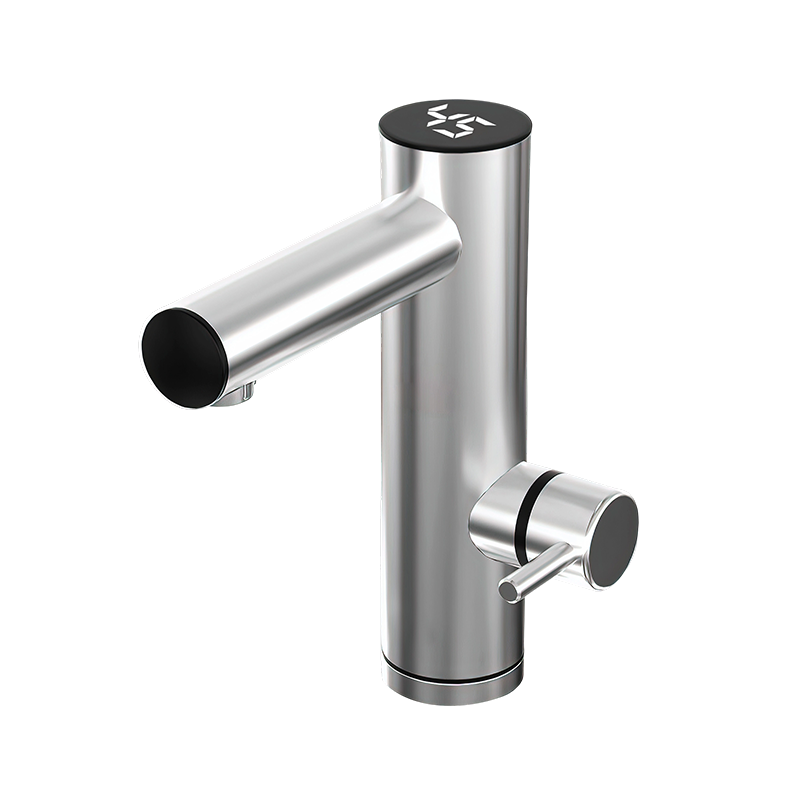 Stainless Steel Anti-Corrosion Instant Electric Bathroom Faucet with LED DisplayThis model combines a stainless steel body with a ceramic valve and a built-in heater, making it a relevant choice for bathrooms where moisture resistance and straightforward filter access support routine maintenance.View Product →
Key takeaway: The cartridge is the heart of a single handle faucet. In traditional and electric models alike, keeping its ceramic discs and seals free of scale is the key to smooth operation.
Six Signs That the Cartridge Needs Cleaning
The cartridge rarely announces its condition with one obvious warning. Instead, you notice a gradually changing behavior that becomes irritating over two or three weeks. If you recognize two or more of the symptoms below, the cartridge should be inspected. Nearly every one of these signs responds to a proper cleaning, except in cases of physical damage.
| Symptom | Likely cause inside the cartridge | First action to take |
|---|---|---|
| Dripping from the spout when the handle is closed | Scale sitting on the ceramic disc sealing faces | Remove and soak the cartridge |
| Reduced water flow | Debris trapped in the inlet screen or disc holes | Clean the inlet filter, then the cartridge |
| Unstable water temperature | Contaminated discs disturbing hot and cold mixing | Inspect the discs after cleaning |
| Stiff or rough lever movement | Mineral film on the stem and seals | Lubricate seals with silicone grease |
| Screeching or grinding sound | Grit riding between the ceramic discs | Soak in vinegar and brush gently |
| Water runs only hot or only cold | Broken or stuck disc mechanism | Consider replacement |
Some of these signs overlap. A faucet that drips and makes noise at the same time usually has a combination of scale and fine sand, which is exactly the situation where a careful cleaning delivers the best result. If the faucet still misbehaves after cleaning and reassembly, move to the cleaning-versus-replacement decision explained later in this article.
Key takeaway: Dripping, weak flow, rough movement, and temperature drift are strong signals that the cartridge is dirty. In most cases cleaning restores normal function without replacing any parts.
Why Cartridge Problems Build Up: Common Causes at a Glance
Cartridge problems rarely come from a single dramatic event. In most households, the performance loss builds up slowly over several months. The two biggest contributors are water chemistry and small particles traveling through the supply line. When scale hardens inside the cartridge, the ceramic discs cannot seal tightly. Understanding the distribution of causes below helps you decide whether cleaning will be enough or whether the cartridge should be replaced.
Share of reported cartridge performance problems
Hard water scale
38%
Sand and pipe debris
27%
Seal and O-ring wear
18%
Corrosion from standing water
10%
Installation defects
7%
Hard water scale accounts for 38 percent of cartridge performance complaints, which is why bathrooms in regions with 180 mg/L or higher calcium carbonate benefit from periodic descaling. Sand, rust, and pipe debris are the second most common contributor at 27 percent because these particles scratch the polished ceramic surfaces and create permanent grooves. Seal and O-ring wear at 18 percent is normal after roughly five to seven years of use, and cleaning the cartridge does little to restore an aged rubber seal. Corrosion from standing water affects about 10 percent of cartridges, especially in seasonal homes that sit empty for months. Installation defects such as cross-threaded retaining nuts or overtightening make up the remaining 7 percent. This distribution confirms that cleaning addresses roughly two-thirds of all cartridge cases, because scale and debris are removable. Physical wear and corrosion, on the other hand, are permanent, and a damaged cartridge should be replaced even if it looks clean after soaking. For homeowners, the practical takeaway is to clean aggressively but inspect carefully. For wholesalers and maintenance teams, tracking these causes helps predict service intervals and warranty costs. The data also explains why inlet filters and strainers are worth the small investment. A faucet with a quality cartridge, built-in filtering, and simple disassembly reduces lifecycle maintenance costs. In short, the chart is a roadmap: treat the water, and the cartridge lasts longer.
Key takeaway: Around 65 percent of cartridge problems are caused by removable scale and debris. Proper cleaning solves the majority of failures, while wear, corrosion, and installation damage require replacement.
How to Clean the Cartridge Inside a Single Handle Bathroom Faucet
Tools and Materials
Collect these items before you begin so the job goes quickly:
- Adjustable wrench or pliers for the retaining nut
- Flathead screwdriver and Allen wrench set for the handle screw
- White vinegar or a citric acid descaler
- Soft toothbrush for scrubbing ceramic discs
- Lint-free cloth and silicone faucet grease
- Small bowl for soaking the cartridge
Step-by-Step Cleaning Procedure
- Shut off the water supply. Close the shutoff valves under the sink and open the faucet to release remaining pressure.
- Remove the handle cap and screw. Pry off the decorative cap with a small flathead screwdriver, then loosen the Phillips or Allen screw beneath it.
- Lift the handle. Pull the handle straight up or rock it gently side to side until it slips off the stem.
- Remove the escutcheon. Unscrew the decorative cover plate so the cartridge retaining assembly is visible.
- Take out the retainer clip or brass nut. Depending on the design, either pull a horseshoe clip or unscrew the retaining nut with pliers.
- Pull the cartridge straight out. Grip the stem with pliers and lift firmly without twisting, because the ceramic discs can crack if the cartridge is pulled at an angle.
- Soak the cartridge. Place it in a bowl of undiluted white vinegar or citric acid solution and leave it for 30 to 60 minutes.
- Brush away the softened scale. Use a soft toothbrush on the ceramic discs, the stem, and the rubber seals, and re-soak stubborn spots.
- Rinse and lubricate. Rinse the cartridge in clean water, dry it, and apply a thin layer of silicone grease to the O-rings.
- Reinstall and test. Slide the cartridge back in, refit the clip or nut, reassemble the handle, restore the water supply, and check for leaks and smooth operation.
What to Do If the Cartridge Is Stuck
If the cartridge will not slide out, do not force it. In many older faucets, mineral scale welds the cartridge to the valve body. Spray a small amount of penetrating oil around the base, wait ten minutes, and rock the cartridge gently side to side with pliers. A cartridge puller tool is a worthwhile purchase for stubborn cases. Avoid clamping the stem too hard, because a broken stem makes removal much harder.
Extra Care for Instant Electric Faucets
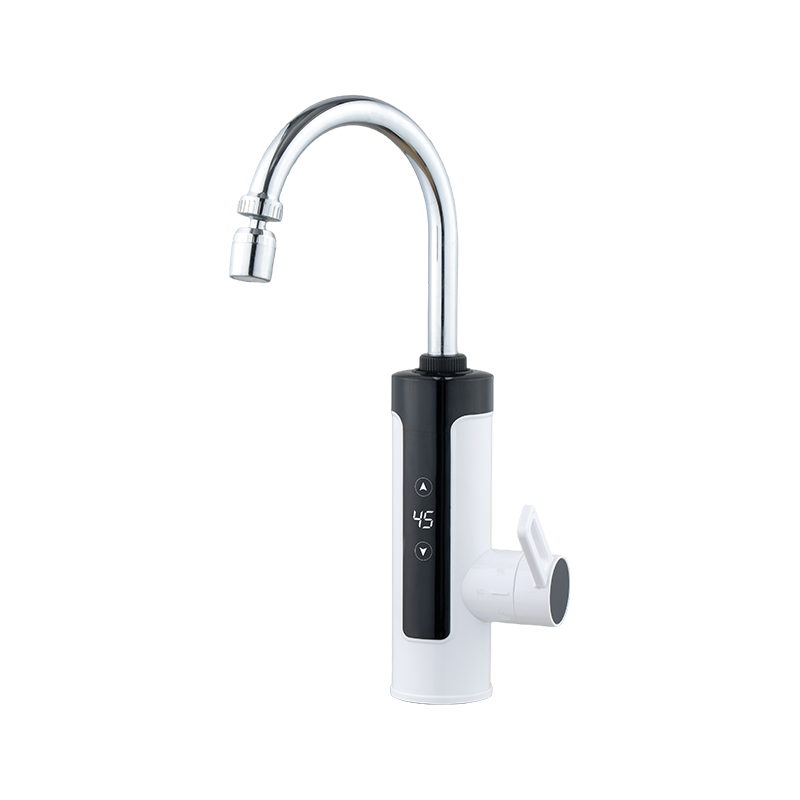
Instant electric bathroom faucets combine the water path with a heating chamber, so maintenance requires a little more caution. Always disconnect the power before opening the faucet, and do not let water enter the electrical compartment. Clean the inlet strainer or filter at the same time, because a clogged filter starves the heater and reduces flow. Many of our electric faucet models, such as the ABS bathroom instant faucet below, are designed with accessible filters and replaceable valves so that a routine cleaning does not require special tools.
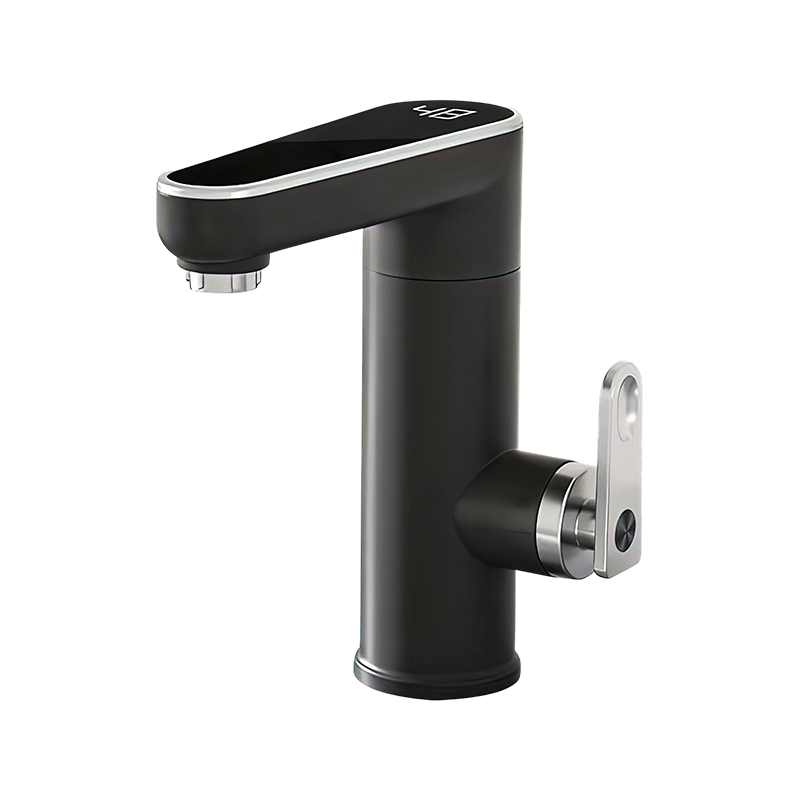 ABS Instant Electric Bathroom Faucet with LED Temperature Display and 120° SpoutDesigned for bathroom use, this ABS faucet heats water in seconds and includes a ceramic valve and accessible filter, which aligns with the article's emphasis on easy maintenance and replaceable parts.View Product →
Key takeaway: With the water off and the right tools, cleaning the cartridge takes 15 to 30 minutes. Soaking in vinegar and brushing gently restores most cartridges to like-new performance.
Clean or Replace? How to Decide
Cleaning should always be your first move, especially if the faucet is less than seven years old. But from our experience as a faucet manufacturer, replacement is the better choice when the ceramic discs are cracked, the stem is corroded, water continues to leak after two cleanings, or the cartridge is no longer available as a standard part. The table below compares the two approaches.
| Factor | Cleaning is the right choice | Replacement is the better choice |
|---|---|---|
| Cost | Almost nothing, just vinegar or descaler | New cartridge costs a moderate amount plus shipping |
| Time | 15 to 30 minutes | 30 to 60 minutes with disassembly |
| Scale and debris | Yes, these are removable by soaking | Not necessary unless repeated scaling recurs |
| Cracked ceramic disc | No, a crack cannot be repaired | Yes, a new disc assembly is required |
| Corroded stem or housing | No, corrosion weakens the whole valve | Yes, especially if the stem is wobbly |
| Faucet still leaks after two cleanings | No, the problem is inside the sealing faces | Yes, install a fresh cartridge |
After cleaning, check the cartridge carefully under good light. The two most reliable signals that cleaning worked are a smooth lever movement and a visible tight seal between the ceramic discs. If you see white crust on the edges only, that is normal and harmless. If you see chips, pits, or a rough matte area in the middle of a disc, the seal face is damaged.
| Signs that cleaning worked Smooth handle movement with no grinding No dripping after reassembly Stable temperature when turning side to side Consistent flow rate at full open |
Signs that replacement is needed Visible chip or crack on a ceramic disc Stem wobbles or feels loose Leak continues after two cleaning cycles Water bypasses the cartridge from the side |
Key takeaway: Clean first, but know when to replace. Cracks, corrosion, and repeated leaks after cleaning are clear signs that the cartridge has reached the end of its service life.
Maintenance Tips to Keep the Cartridge Clean Longer
Prevention is more reliable than any cleaning routine. In areas with hard water, the mineral load reaching the faucet is the core problem, and a few inexpensive habits will keep the cartridge operating smoothly between maintenance intervals.
- Flush the supply line before reinstalling the cartridge so loose debris does not re-enter the valve.
- Install a small inlet screen or sediment filter on the supply line under the sink; it catches the sand and rust that scratch ceramic discs.
- Descale the aerator and cartridge every three to six months in hard water regions, and once a year elsewhere.
- Use only soft cleaners and a toothbrush on the cartridge; abrasive pads and metal brushes remove the polished surface of the ceramic discs.
- Operate the handle with moderate force and avoid over-tightening the handle screw, because excessive pressure bends the stem and disturbs the disc alignment.
- Lubricate the O-rings with silicone grease once a year to prevent dry friction and stiff movement.
- For instant electric faucets, clean the inlet filter at the same frequency, and never run the heater without water flow.
The safety design of instant electric faucets matters because water and electricity share the same terminal device. A well-maintained filter, heater chamber, and valve keep the faucet running safely and efficiently month after month. For a closer look at the protective features of electric bathroom faucets, see the related article listed in the resources section at the end.
Key takeaway: Filtering the water, descaling regularly, and lubricating seals are the three most effective habits for extending cartridge life in both traditional and electric faucets.
What Wholesalers, Suppliers, and Maintenance Teams Should Look For
For buyers responsible for large orders or building maintenance, the cartridge is a warranty variable, not just a spare part. When you evaluate a faucet supplier, inspect three things: the quality of the ceramic cartridge, the accessibility of the filter, and the availability of replacement parts. A faucet that requires full disassembly for a routine cleaning will generate higher labor costs over its lifetime.
The three product families below represent different balance points between cost, durability, and maintenance convenience.
ABS Electric Kitchen Faucets
Lightweight, multi-function kitchen models with LED temperature display, 3000W-3400W heating, and replaceable inlet filters. Best value for high-volume wholesale programs.
Stainless Steel Electric Faucets
Anti-corrosion stainless steel bodies with thermostatic control and over-temperature protection. Designed for bathrooms and kitchens where durability is the priority.
Quick Free-Installation Faucets
Tool-free connection kits with single-handle operation and constant-temperature options. Ideal for renters, hotels, and temporary installations.
Our factory provides OEM and ODM services, and we support CE and ISO9001 quality standards. Customers who order in volume can specify the cartridge brand, filter configuration, and even the handle finish. The stainless steel heated basin tap below is a typical example of a maintenance-friendly design: ceramic valve, accessible filter, and simplified disassembly for cleaning.
 ABS Electric Heated Basin Tap with Adjustable Temperature and 360° RotationFeaturing fast heating, temperature control, and a ceramic valve, this ABS basin tap suits wholesale buyers looking for a maintenance-friendly design with accessible parts and reliable performance.View Product →
If you manage wholesale procurement for a distribution company, brand, or e-commerce store, the lesson is straightforward: compare cartridge quality and spare-parts availability before comparing only unit price. A faucet that fails early and requires a whole-unit replacement will erase the initial savings. You will find our contact page in the resources section at the end of this article.
Key takeaway: For wholesalers and maintenance teams, faucets with high-quality ceramic cartridges, replaceable inlet filters, and simple disassembly cut lifecycle costs and reduce warranty claims.
Frequently Asked Questions
Here are the most common questions we receive from homeowners, maintenance staff, and wholesale customers about cleaning and caring for the cartridge in a single handle bathroom faucet.
How often should I clean the cartridge inside a single handle bathroom faucet?In an area with soft or mildly hard water, an annual cleaning is usually enough. If your water has more than 180 mg/L of calcium carbonate, plan to clean the cartridge and the aerator every three to six months. Irregular flow or a first sign of dripping means it is time to clean sooner. |
Can I clean the cartridge without turning off the water supply?No. Always close the shutoff valves below the sink and drain the faucet completely before removing the cartridge. Water left in the line will spray out under pressure, and you also need a dry valve body to reassemble the retaining clip and handle. |
Is vinegar safe for all cartridge materials?Undiluted white vinegar is safe for ceramic discs, rubber seals, and stainless steel. Avoid leaving metal springs or clips soaking for longer than one hour, and never boil the cartridge. For heavily scaled electric faucet valves, a citric acid solution works faster and is gentler on plastic parts. |
My faucet still leaks after cleaning. What should I do next?A leak that survives a thorough cleaning usually means the ceramic disc faces are scratched or the O-rings have lost their elasticity. Inspect the discs for roughness under bright light. If you see damage, replace the cartridge with the same model number noted on the old stem. |
Do instant electric bathroom faucets have a cartridge that needs cleaning?Yes. The flow-control valve in an instant electric faucet is a ceramic cartridge with the same design as a traditional faucet cartridge. Electric models add an inlet filter and a heating chamber, so the maintenance routine includes cleaning the filter and flushing the heater as well as the valve. |
How do I know which replacement cartridge to buy?Check the stem of the old cartridge for a stamped model number or mark. If the mark is unreadable, measure the length of the cartridge body, the number of teeth on the stem, and the opening diameter of the valve body. These three measurements let a plumbing supplier narrow the match quickly. |
Key takeaway: A clean cartridge in a single handle bathroom faucet rarely needs replacement. Annual cleaning in normal water, quarterly in hard water, and a careful inspection after each cleaning keep the faucet reliable for years.
Useful Resources and More Reading
For more information about electric faucet safety, cleaning, and commercial inquiries, start with these two resources from our site.
- Why instant electric bathroom faucets are safe: key protective features explained
- Contact us for OEM, ODM, and wholesale inquiries
Key takeaway: Regular cartridge cleaning keeps a single handle bathroom faucet working like new, and the same water-quality habits protect instant electric faucets in kitchens and bathrooms.



NINGBO MAITENG ELECTRIC APPLIANCE CO., LTD. integrates production and sales. The company adopts a dual model of self-management and distribution sales.
- CONTACT INFO
-
NO.8 Yaobei Avenue,Simen Town, Yuyao City, Ningbo City, Zhejiang, China
-
 +86-159 5821 2132
-
 +86-574-62178444
-
 +86-159 5821 2132
-
 [email protected]
[email protected]
-
- SCAN IT
-
Mobile terminal

