


 English
  Español
How Does Over Temperature Protection Work in Water Taps?
Date:2026-05-13
Content
- 1 The Mechanism: How Over Temperature Protection Actually Triggers
- 2 OTP vs No OTP: A Safety and Durability Comparison
- 3 Energy Saving Hot Water Tap: How OTP Contributes to Efficiency
- 4 Instant Hot Tap vs Water Heater: Where OTP Makes the Biggest Difference
- 5 Best Instant Faucet for Winter: What OTP Specs to Prioritise
- 6 How to Install a Heating Faucet Safely — OTP Considerations
- 7 About NINGBO MAITENG ELECTRIC APPLIANCE CO., LTD.
- 8 Frequently Asked Questions
Over temperature protection in a water tap works by monitoring the internal heating core temperature in real time and cutting electrical power the instant that temperature exceeds a safe threshold — typically 75 °C. This automatic shutoff prevents scalding water from reaching the outlet, protects the heating element from thermal runaway, and extends the service life of the appliance. Every quality electric faucet or instant heating tap sold in regulated markets is required to carry this feature as part of CE certification. This article explains the mechanism in detail, shows why it matters in practice, and helps you choose the right over temperature protection faucet for your kitchen or bathroom.
Outlet Water Temperature vs Burn Risk — Why the 75 °C Cutoff Matters
Figure 1 — Burn risk by outlet temperature; a properly calibrated OTP circuit prevents the tap reaching the danger zone
The Mechanism: How Over Temperature Protection Actually Triggers
Inside every instant hot tap or quick heating water faucet, a thermistor — a resistor whose electrical resistance changes predictably with temperature — sits directly against the heating core. The control board reads resistance values up to 20 times per second. When the measured value corresponds to a temperature at or above the cutoff point, the board opens a relay, breaking the circuit to the heating element in under 50 milliseconds. Cold water continues to flow freely, so the user is never left without water; they simply receive unheated water until the unit cools and resets.
High-quality units add a second layer: a thermal fuse that physically melts and permanently breaks the circuit if the electronic cutoff fails. This redundant design is what separates CE-certified products from uncertified alternatives. The thermal fuse is a passive, one-time device — its presence confirms the manufacturer has planned for worst-case electronic failure.
On an electric hot water tap with display, the outlet temperature is shown in real time on an LED panel. When the OTP circuit activates, the display typically flashes an "E" or "HI" error code, making the event visible and easy to diagnose. This transparency is a practical safety and maintenance advantage.
What Triggers an Over-Temperature Event?
- Zero or near-zero water flow — if the handle is barely cracked open, the tiny water volume heats far faster than normal, spiking core temperature within seconds.
- Blocked outlet or aerator — limescale or debris can restrict flow, creating the same low-flow overheating condition.
- Extremely cold inlet water — in deep winter, mains water arriving at 4–6 °C demands maximum wattage for longer, increasing thermal stress on the core.
- Component degradation over time — scale build-up on the heating element creates hot spots; periodic descaling prevents unnecessary OTP activation.
OTP vs No OTP: A Safety and Durability Comparison
Choosing an electric heating faucet without a verified OTP circuit is a measurable risk. The table below summarises what changes when this feature is present versus absent across real-world scenarios:
| Scenario | With OTP | Without OTP |
|---|---|---|
| Low-flow / blocked aerator | Power cuts off automatically | Core overheats, element may fail |
| Child touches outlet | Max 55 °C at spout | Outlet may reach 70 °C+ |
| Scale build-up on core | OTP activates before damage | Element burns out prematurely |
| Electronic sensor fault | Thermal fuse as backup | No secondary protection |
| Avg. heating core lifespan | 10,000–15,000 hours | 4,000–7,000 hours |
Energy Saving Hot Water Tap: How OTP Contributes to Efficiency
Over temperature protection is not only a safety feature — it is integral to the efficiency of an energy saving hot water tap. By keeping the heating core operating within its optimal temperature band, the OTP circuit ensures the element converts electricity to heat at maximum efficiency. An overheating core running above its design temperature wastes a portion of its input energy as unproductive heat loss into the housing rather than into the water.
A well-managed self heating water tap running within its thermal envelope reaches 95–98% energy conversion efficiency. By comparison, a storage water heater loses 15–25% of its daily energy to standby heat dissipation through the tank walls — before a single litre of hot water is drawn.
Core Temperature Over Time — With OTP vs Without OTP (low-flow scenario)
Figure 2 — Simulated core temperature rise in a low-flow scenario; OTP flatlines the curve at the safety threshold
Instant Hot Tap vs Water Heater: Where OTP Makes the Biggest Difference
In the Instant Hot Tap vs Water Heater debate, over temperature protection is one area where the compact instant hot water tap for kitchen use has a structural advantage. A storage heater holds 50–100 litres of water at 60–70 °C continuously — a large thermal reservoir that takes time to dissipate even if the thermostat fails. An instant tap heats only the water currently flowing through a chamber of 80–120 ml. When the OTP triggers, the heating element cools within seconds because there is almost no stored thermal mass. The result is a much faster and more complete safety response.
Element Cool-Down Time After OTP Trigger (seconds)
Figure 3 — Indicative element cool-down after OTP activation by appliance type; less thermal mass = faster and safer response
Best Instant Faucet for Winter: What OTP Specs to Prioritise
Winter is when OTP circuits are tested most frequently. Mains water arriving at 5–8 °C requires the heating element to work at full rated wattage for longer, increasing the probability of thermal stress events. When choosing the best instant faucet for winter, check these OTP-related specifications:
- Dual-layer protection: electronic thermistor cutoff plus a physical thermal fuse rated at 92 °C or lower.
- Auto-reset vs manual-reset: auto-reset units restore power once the core cools to a safe temperature; manual-reset units (with a physical button) are considered safer in professional settings as they require deliberate intervention.
- Error code display: an electric hot water tap with display that shows an OTP error code lets the user diagnose a flow restriction or limescale build-up immediately, rather than assuming a unit fault.
- Rated wattage of 3000W+: higher wattage units reach target temperature faster, reducing the time the element runs at maximum load and therefore the cumulative thermal stress per use cycle.
- CE and IP44 ratings: confirm the OTP circuitry meets European safety standards and that wiring connectors are splash-proof.
Safety Feature Radar — Basic Unit vs OTP-Certified Instant Tap
Figure 4 — Relative safety feature scores across five dimensions (indicative, 0–100%)
How to Install a Heating Faucet Safely — OTP Considerations
Knowing how to install a heating faucet correctly is the first line of defence against nuisance OTP triggering and premature failure. Improper installation — particularly under-sized wiring or shared circuits — creates conditions where the element runs hotter than designed. Follow these steps:
- Isolate the cold water supply and drain residual pressure from the existing tap before removing it.
- Check the circuit rating: a heating water tap rated at 3000W draws 13A at 230V. It must be served by a dedicated 16A or 20A circuit with RCD (30 mA) protection — not a shared kitchen ring.
- Use the supplied hose fittings and PTFE tape on all threaded joints. Leaking connections allow water to reach wiring, which can cause OTP activation through unintended electrical loading.
- Mount the unit vertically where specified: most ABS electric heating faucet designs require a specific orientation so that the thermistor sits at the hottest point of the chamber. Incorrect orientation places the sensor in a cooler zone and delays OTP response.
- Run the tap fully open for 30 seconds before first power-on to purge air from the chamber. Air pockets cause dry-element heating, the most common cause of premature OTP activation in new installations.
- Test at minimum flow: slowly reduce flow to confirm the OTP triggers or the display warns before the outlet temperature becomes uncomfortable. Document the trigger point.
Maintenance to Keep OTP Functioning Reliably
The OTP system is only as effective as the components around it. In hard-water areas (above 200 mg/l TDS), descale the heating chamber every 6–12 months using a citric acid solution. Limescale coats the thermistor, slowing its temperature-reading response by up to 30% — meaning the OTP activates later than it should. A clean sensor is a fast sensor.
About NINGBO MAITENG ELECTRIC APPLIANCE CO., LTD.
Established in 2011, NINGBO MAITENG ELECTRIC APPLIANCE CO., LTD. has been dedicated to the electric water heating faucet project for over a decade. The company holds ISO9001 and CE certifications, operates across a 10,000 square metre facility, employs 200 staff, and produces an annual output of 2 million units. Departments span sales, e-commerce, production, after-sales, warehousing, and quality inspection.
Strategic partnerships with renowned domestic brands including Arrow, Konka, Sacon, Sunrain, and Royalstar complement the company's own brands — Dongri Le and Aituosheng. In March 2019, the HELLO DREAM brand was launched, supported by a dual model of self-operation and distribution across 4 Tmall stores, 5 Pinduoduo stores, 2 Taobao enterprise stores, and 1 Alibaba wholesale platform store. A dedicated foreign trade department, established in 2023, now serves international customers directly.
Built on the principle of "quality first" and guided by the slogan "Fast and hot life starts with me", the company welcomes factory visits and looks forward to cooperation with partners worldwide.
Frequently Asked Questions
Q1. What happens when the over temperature protection triggers — does the tap stop working completely?
A: No. On most instant hot tap models, the heating element is cut but water flow continues normally. You receive cold water until the core cools below the reset threshold — usually within 8–15 seconds on auto-reset units. The tap resumes heating automatically once safe. On manual-reset designs, a small button on the housing must be pressed to restore heating.
Q2. My electric faucet keeps triggering OTP. What should I check first?
A: The three most common causes are a blocked or partially closed aerator restricting flow, limescale build-up coating the heating core, and a shared electrical circuit that cannot sustain the rated load. Clean the aerator, descale the chamber with citric acid, and verify the tap is on a dedicated circuit. If OTP triggering continues, the thermistor may need replacing — contact the manufacturer's after-sales team.
Q3. Is over temperature protection the same as a thermostat?
A: They serve different purposes. A thermostat regulates the target outlet temperature during normal operation — for example, maintaining 42 °C. Over temperature protection is an independent safety circuit that activates only when the core temperature exceeds a separate, higher safety threshold. On a self heating water tap, these two systems operate in parallel: the thermostat manages comfort, and the OTP prevents harm.
Q4. Does the ABS shell of an ABS electric heating faucet affect heat safety?
A: Yes, positively. ABS (Acrylonitrile Butadiene Styrene) is a poor thermal conductor and a good electrical insulator. This means heat generated inside the chamber stays in the water rather than transferring to the outer housing, and any electrical fault is contained. Users can touch the body of an ABS electric heating faucet during operation without risk of burn from the casing — the outer surface remains close to ambient temperature.
Q5. Can I use an instant hot water tap for kitchen tasks that need precise temperatures, like making tea?
A: An instant hot water tap for kitchen use with a digital temperature display can produce water at consistent temperatures — typically adjustable between 35 °C and 55 °C. For green tea (75–80 °C) or boiling-point needs (100 °C), a dedicated kettle is more appropriate, as standard hot water faucet units cap outlet temperature below boiling as part of their safety design.
Q6. How do I know if a quick heating water faucet is CE certified?
A: CE-certified products carry the CE mark directly on the unit body and in the product documentation, alongside an EU Declaration of Conformity document listing the specific directives tested (typically Low Voltage Directive 2014/35/EU and EMC Directive 2014/30/EU). Verified manufacturers such as NINGBO MAITENG provide certification documentation on request for trade and wholesale buyers.
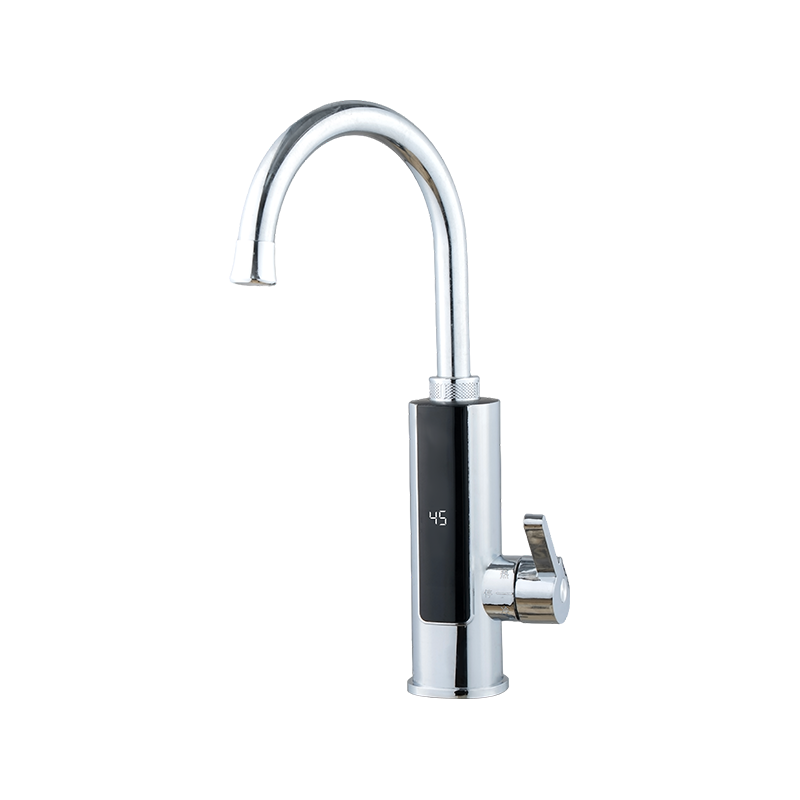
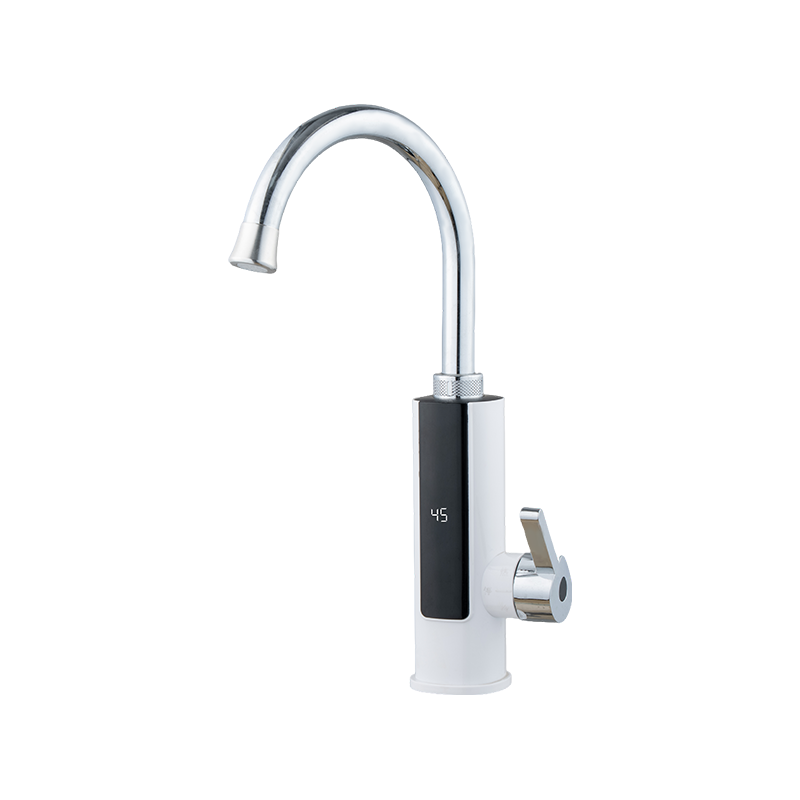
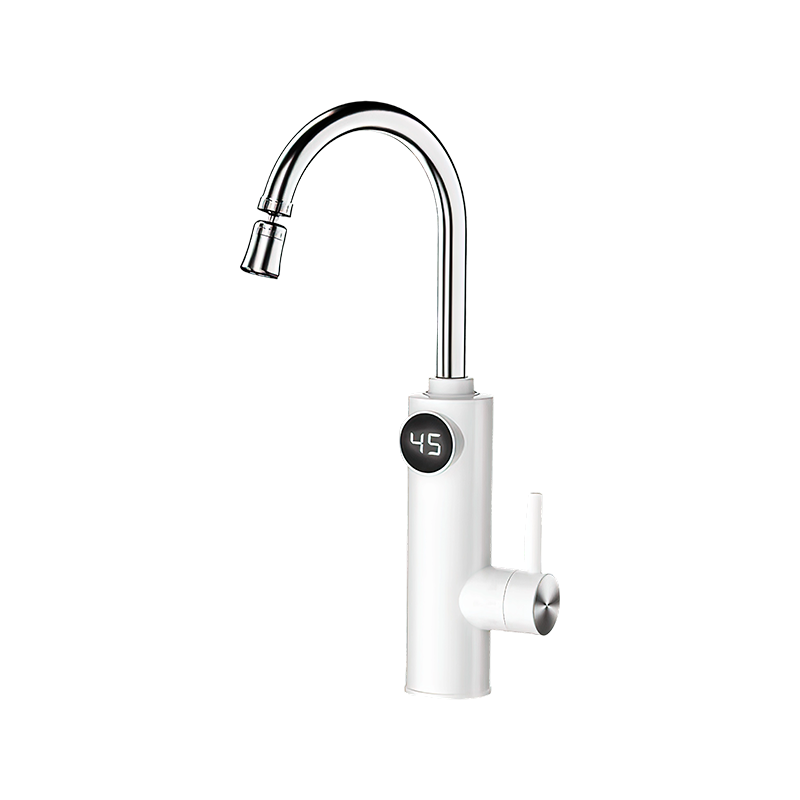
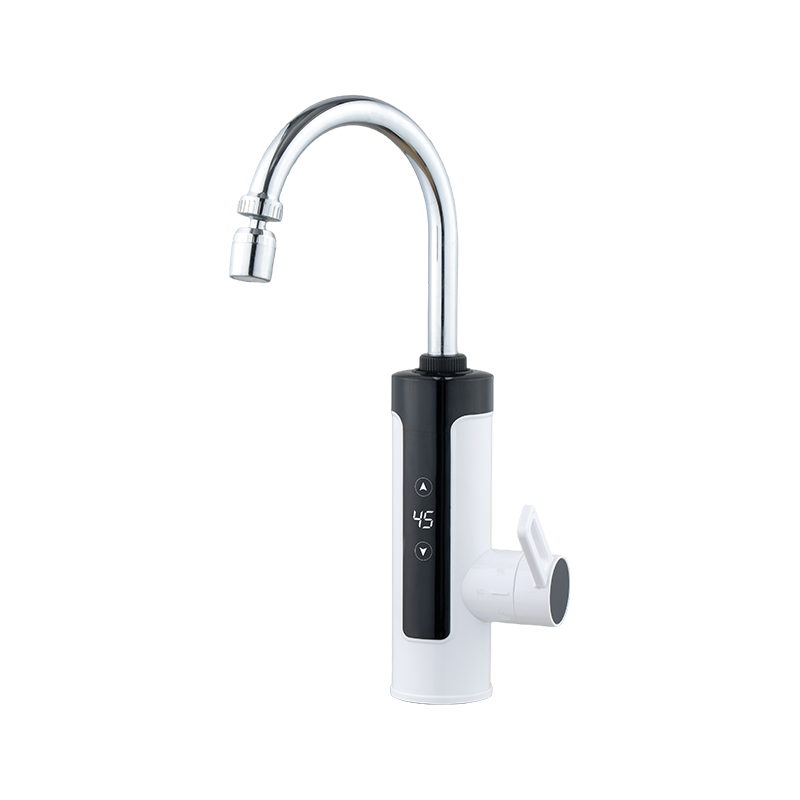



NINGBO MAITENG ELECTRIC APPLIANCE CO., LTD. integrates production and sales. The company adopts a dual model of self-management and distribution sales.
- CONTACT INFO
-
NO.8 Yaobei Avenue,Simen Town, Yuyao City, Ningbo City, Zhejiang, China
-
 +86-159 5821 2132
-
 +86-574-62178444
-
 +86-159 5821 2132
-
 [email protected]
[email protected]
-
- SCAN IT
-
Mobile terminal

