


 English
 Español

Bathroom Faucet Aerators Explained: Flow Rates, Fit and Instant Hot Water Faucet Sourcing
Date:2026-11-17
Content
- 1 What a Bathroom Faucet Aerator Actually Does Inside the Spout
- 2 Bathroom Faucet Aerator Flow Rates: 1.2, 1.5, 1.8 and 2.2 gpm in Practice
- 3 Thread Standards and Fit: Why the Wrong Aerator Comes Back
- 4 Why the Bathroom Faucet Aerator Decides Whether Instant Hot Water Feels Hot
- 5 Scale, Sediment and Material Choice After Six Months of Use
- 6 Specifying Bathroom Faucet Aerators for OEM, Wholesale and Private Label Orders
- 7 Installation and Retrofit: A Practical Checklist
- 8 Frequently Asked Questions About Bathroom Faucet Aerators
- 8.1 What does a bathroom faucet aerator actually do?
- 8.2 How do I identify the thread size I need?
- 8.3 Can I fit a lower-flow aerator to an instant electric faucet?
- 8.4 Why did the flow drop suddenly after a few months?
- 8.5 Do aerators work with tankless and instant heaters?
- 8.6 Are aerators required by regulation?
- 8.7 How often should an aerator be replaced?
- 9 Getting the Aerator Right the First Time
A replacement aerator costs less than a cup of coffee, yet it decides whether a bathroom tap feels strong or weak, whether the stream splashes over the basin rim, and on an instant electric faucet, whether the water actually arrives warm. We have traced returns of 3.4 kW instant heating taps labelled "not hot enough" back to a spout running at six litres per minute with no restrictor fitted. The heater was doing exactly what the specification promised; the aerator was simply passing more water than the element could lift in temperature.
This guide looks at the bathroom faucet aerator the way a manufacturer and a buyer look at it: a small, precisely specified component with thread standards, flow classes, material grades and a measurable effect on the whole tap. It covers what the part does, how to size flow correctly, which threads exist in the market, how scale and water hardness change behaviour over time, and what to check before committing to a container load. Where it helps, we use examples from our own ABS and stainless steel instant heating faucet lines, because those products show the aerator's influence more clearly than a cold-water tap ever will.
What a Bathroom Faucet Aerator Actually Does Inside the Spout
An aerator is the fitting screwed or pressed onto the end of the spout. Water enters a small chamber, is forced through a perforated disc, draws air in through side slots, and leaves as a cluster of fine jets that recombine into one soft stream. That is the visible behaviour. The engineering purpose is narrower: the aerator is the flow-limiting and stream-shaping device at the last centimetre of the water path.
Most units contain four functional layers. The outer shell carries the thread and takes the tightening torque. A stack of two to four stainless steel mesh discs breaks up the flow and traps grit. A mixing chamber introduces air. A coloured restrictor disc, often green, blue or orange, sets the maximum flow. Between the shell and the spout sits a flat rubber washer on male threads or an O-ring on female threads, and that washer is responsible for a large share of the leaks blamed on the tap body.
Aerated and Laminar Streams Are Not Interchangeable
An aerated stream is white and soft, and it feels fuller than it measures. A laminar stream is clear and glassy, with no air mixed in, and it is the correct choice where water is stored or where hygiene rules apply, such as healthcare basins, sensor taps and some food preparation areas. Laminar inserts also resist the biofilm growth that a foaming aerated stream can encourage in warm, stagnant conditions.
On an instant electric tap, the aerator sits downstream of the heating chamber, so it never touches the water before it is heated. That position matters for troubleshooting. If the flow is wrong, the temperature is wrong, but the heating element itself is usually innocent.
An aerator is a flow-control device first and a comfort feature second. Specify the flow rate and the feel of the stream follows on its own.
Bathroom Faucet Aerator Flow Rates: 1.2, 1.5, 1.8 and 2.2 gpm in Practice
Flow is quoted in gallons per minute in North America and litres per minute almost everywhere else. The conversion is simple: 1 gpm equals 3.785 litres per minute, so a 2.2 gpm aerator passes 8.3 litres per minute, and a 1.5 gpm aerator passes 5.7. Buyers who work in both units regularly confuse the two, and a specification written as "1.5" without a unit has caused more than one wrong shipment.
The practical question is what each class feels like at the basin. A 2.2 gpm aerator feels generous and fills a basin quickly, and it is still the ceiling for most residential bathroom taps in the United States under the federal maximum. A 1.5 gpm aerator, the level used by the WaterSense programme, feels noticeably lighter but still acceptable for hand washing when the stream is aerated. Below 1.2 gpm, hand washing starts to feel slow, and rinsing toothpaste from the basin takes longer than most users expect. In Europe, green building specifications and many public projects ask for five to six litres per minute at the basin, which lands between 1.3 and 1.6 gpm.
The table below converts those classes into daily and annual volumes for a typical family, so the difference can be discussed in cubic metres rather than adjectives.
| Flow class | Litres per five-minute wash | Household use per day | Household use per year | Typical application |
|---|---|---|---|---|
| 0.5 gpm / 1.9 l/min | 9.5 | 38 litres | About 13,800 litres | Public washrooms, extreme water saving |
| 1.0 gpm / 3.8 l/min | 18.9 | 76 litres | About 27,600 litres | Instant electric taps in warm climates |
| 1.5 gpm / 5.7 l/min | 28.4 | 114 litres | About 41,500 litres | WaterSense specification, mainstream residential |
| 2.2 gpm / 8.3 l/min | 41.6 | 167 litres | About 60,800 litres | US federal maximum, high-comfort basins |
The spread between the top and bottom row is roughly 47,000 litres a year for one basin. For a hotel with 200 bathrooms, the same arithmetic becomes a utility budget line rather than a talking point.
Two sentences of context help before reading the chart. The bars compare water used during a single five-minute wash at five common aerator settings, with the widest setting indexed at 100 percent. The shape of the comparison is the reason procurement teams now treat the aerator as a costed component rather than a free accessory.
Water used in a five-minute basin wash (litres per person)
2.2 gpm, 8.3 l/min, open standard aerator
41.6 litres
1.8 gpm, 6.8 l/min, high-comfort restrictor
34.0 litres
1.5 gpm, 5.7 l/min, WaterSense level
28.4 litres
1.2 gpm, 4.5 l/min, European project level
22.7 litres
1.0 gpm, 3.8 l/min, instant-tap winter setting
18.9 litres
The lowest bar uses less than half the water of the highest, and that gap is the entire argument for treating flow class as a specification rather than an afterthought. On instant heating taps the calculation is even tighter, because the flow rate must stay inside the heating capacity of the element, as the next section explains. In our own catalogue, the ABS and stainless steel instant heating faucets are supplied with restrictors sized for the destination market, and the same tap body can ship with a 2 l/min insert for a cold northern market and a 4 l/min insert for a warmer one. That flexibility comes from standardising the thread and the aerator pocket across the range, which also keeps spare-part inventories small for wholesalers.
Choose the flow class from the heating capacity and the local regulation, not from habit; the aerator is the cheapest place in the whole tap to correct a flow decision.
Thread Standards and Fit: Why the Wrong Aerator Comes Back
Thread mismatch is the single most common reason an aerator is returned, and it is entirely preventable. Aerators are defined by the outer diameter of the thread in millimetres and by gender: a male aerator has the thread on the outside of the shell and screws into the spout, while a female aerator has the thread inside and screws onto a protruding spout nose. Mixing those two up produces a part that looks close enough in a photograph and will not start by hand.
| Thread | Nominal diameter | Where it appears | Buying notes |
|---|---|---|---|
| M24 male | 24 mm outside | Most European basin mixers | The default for EU residential projects |
| M24 female | 24 mm inside | Recessed and concealed spouts | Often needs a key to remove |
| M22 male | 22 mm outside | Older European taps, some US models | Adapters widely available, but every adapter adds a joint |
| M20 male | 20 mm outside | Compact basins, some Asian models | Limited choice of flow classes |
| M18.5 male | 18.5 mm outside | Small basin and travel taps | Frequently specified on low-cost faucets |
| M16.5 male | 16.5 mm outside | Very small spouts, some pull-out heads | Check insertion depth before ordering |
| Clip-in insert | Not threaded | Pull-out sprays, hidden aerators | Model-specific, keep a parts list by tap SKU |
Three details decide whether an aerator fits properly. First, the washer type: a flat washer seats against the end face of the spout, while an O-ring seats inside a groove, and swapping them causes weeping under pressure. Second, the insertion depth: an aerator that is 2 mm too tall can protrude below the spout rim and look wrong even when the thread is correct. Third, the tightening torque: brass shells tolerate firm hand tightening plus a quarter turn with a key, while plastic shells deform and crack if a wrench is used. We recommend a torque of roughly 1.5 to 2.5 Nm for M24 plastic bodies and up to 4 Nm for brass, always with a soft jaw or an aerator key rather than pliers.
Adapters solve a mismatch but introduce a second sealing face, add 5 to 10 mm of length and often reduce flow by a few percent. For a renovation of twenty bathrooms, an adapter is a reasonable answer. For a production order of twenty thousand taps, the right answer is to change the spout thread on the drawing.
Record the thread, gender, washer type and insertion depth for every tap SKU, and the aerator stops being a source of returns.
Why the Bathroom Faucet Aerator Decides Whether Instant Hot Water Feels Hot
An instant electric faucet heats water as it passes the element, so the temperature at the spout is a balance between heating power and flow rate. A 3 kW element raising the temperature of 3 litres per minute by about 14 K is doing well; the same element at 6 litres per minute can only manage roughly 7 K. Users do not report that as a flow problem, they report it as "the water is cold", and the aerator is where the fix lives.
| Heating power | Flow rate | Temperature rise | Outlet with 10 °C inlet | Outlet with 20 °C inlet |
|---|---|---|---|---|
| 3.0 kW | 2.0 l/min | 21.5 K | 31.5 °C | 41.5 °C |
| 3.0 kW | 3.0 l/min | 14.3 K | 24.3 °C | 34.3 °C |
| 3.4 kW | 2.0 l/min | 24.4 K | 34.4 °C | 44.4 °C |
| 3.4 kW | 3.0 l/min | 16.2 K | 26.2 °C | 36.2 °C |
| 3.4 kW | 6.0 l/min | 8.1 K | 18.1 °C | 28.1 °C |
The table explains a recurring support conversation. A customer in a market with 8 °C winter mains water installs a 3.4 kW tap, removes the restrictor because the flow "looks weak", and then reports lukewarm water in January. Refitting a 2 l/min restrictor solves it without touching the heater. The same logic works in reverse for warm markets, where a 4 l/min insert is comfortable because the incoming water is already at 22 to 26 °C.
The second effect is scale on the mesh. As calcium carbonate blocks the screen, flow falls, temperature rises, and a thermostatic model begins to hunt between hot and cold as it tries to hold a set point against a changing flow. On models with over-temperature or dry-burn protection, a heavily blocked aerator can trip the safety cut-out during low-flow use. Cleaning the aerator is therefore part of the maintenance schedule for the appliance, not just for the tap. Our own instant heating taps use a removable aerator pocket so the restrictor and mesh stack can be serviced from the top without dismantling the spout.
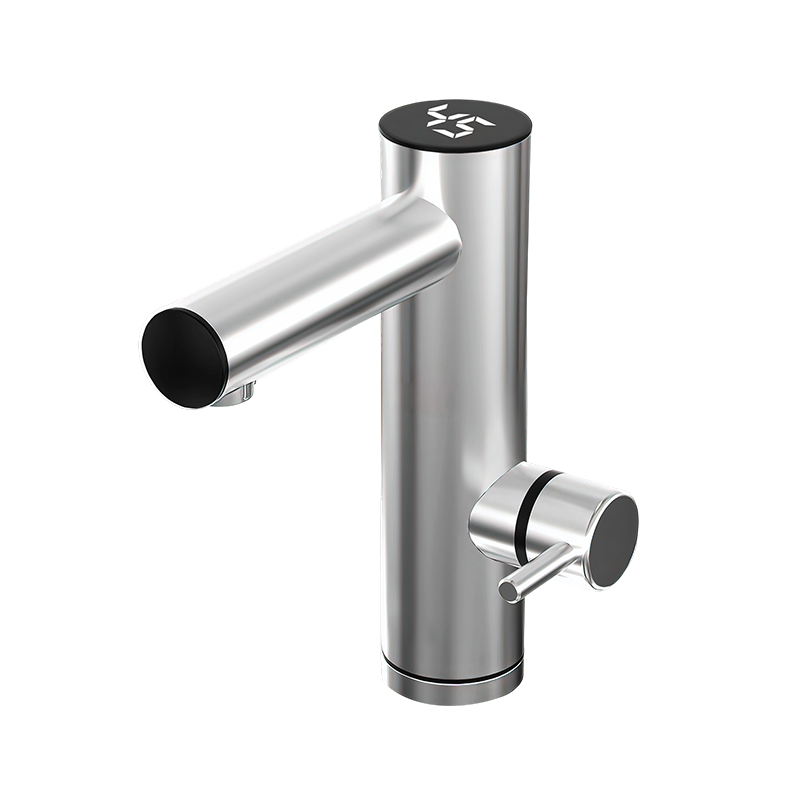 BGD-04X-34 Stainless Steel Instant Electric Bathroom FaucetStainless steel instant electric bathroom faucet with real-time LED temperature display and multiple safety protections, including a removable aerator pocket for servicing.View Product →
That stainless steel bathroom model is a useful reference point for how the parts interact: the corrosion-resistant body suits high-chloride water, the heating chamber sits ahead of the outlet, and the aerator is the last component to touch the stream. Buyers comparing instant heating taps for a project should also read our notes on safety considerations for instant electric bathroom faucets, which cover earthing, leakage protection and installation conditions that no aerator can compensate for.
Match the restrictor to the heater wattage and the coldest inlet temperature in the target market, and most "not hot enough" complaints disappear.
Scale, Sediment and Material Choice After Six Months of Use
Aerators fail in a predictable order. The mesh screens collect grit and scale first, the mixing chamber follows, and the thread and washer are usually the last to give trouble. How quickly that happens depends on hardness, which is normally reported as milligrams of calcium carbonate per litre. Water below 60 mg/L is soft and rarely causes visible blocking within a year. Between 60 and 120 mg/L, most households see reduced flow within twelve months. Above 180 mg/L, screens can lose a noticeable share of their open area within a single heating season, and a descaling routine becomes mandatory rather than optional.
Cleaning Without Damaging the Screens
- Unscrew the aerator with a plastic key or a soft-jaw wrench, never with pliers on a chrome shell.
- Rinse the mesh stack under running water in the reverse direction to the normal flow.
- Soak in a 5 percent citric acid solution for 20 to 30 minutes; white vinegar works but smells stronger and attacks some zinc alloys.
- Rinse thoroughly and reassemble in the original order, with the coarse mesh upstream and the fine mesh downstream.
- Do not scrub with a wire brush, which flattens the weave and permanently changes the flow pattern.
Materials That Survive Chlorinated Water
The shell matters more than buyers expect. Chrome-plated brass, typically CW617N or equivalent, holds threads well and tolerates repeated removal. POM and ABS shells are lighter, cheaper and perfectly adequate for sealed, single-use assemblies where the aerator is not serviced. Zinc alloy shells are the weak point: in chlorinated or soft acidic water they can dezincify, turning brittle and cracking at the thread. For hospitality projects where taps are cleaned daily with aggressive chemicals, specify brass or engineering plastic and skip the zinc option entirely.
Seals follow the same rule. EPDM handles hot water and chlorine well and is the sensible default for instant heating taps. NBR is fine for cold water but ages faster above 60 °C. Silicone O-rings tolerate temperature but swell in some oils and cleaning agents, so they are better reserved for specific chemical environments.
Tightening the mesh specification is worthwhile. A stack of two 60-mesh 304 stainless discs and one coarser 40-mesh disc upstream gives a good balance between grit capture and flow stability, and it resists deformation better than a single fine screen. For public washrooms, add a tamper-resistant torx housing so the insert cannot be removed and discarded, which quietly destroys the water-saving case for the whole building.
Brass or engineering plastic bodies with EPDM seals and a 60-mesh stainless stack will outlast any zinc alternative, and the difference in unit cost is measured in cents.
Specifying Bathroom Faucet Aerators for OEM, Wholesale and Private Label Orders
Once a buyer moves from one tap to a thousand, the aerator becomes a line item with a drawing, a test plan and a spare-part strategy. The specification does not need to be long, but it does need to be unambiguous, because the same nominal part can be built to several different quality levels that look identical in a photograph.
What Belongs on the Drawing
- Thread size and gender, expressed as M24 male or M22 female rather than "standard".
- Flow class at 3 bar dynamic pressure, in litres per minute, with the tolerance band stated, for example 5.7 l/min plus or minus 0.5.
- Stream type: aerated, laminar or dual spray, with a photo or a reference sample.
- Body material and finish, including the plating thickness if chrome is specified.
- Mesh count and material for each disc in the stack, in sequence.
- Seal material and hardness, plus the washer type.
- Tamper resistance requirement, if the installation is public or semi-public.
- Marking: flow class, brand or production code, and where it is placed so it remains legible after installation.
Testing and Certification Expectations
For projects that require formal compliance, the aerator is usually tested as part of the finished tap rather than on its own. In North America, wetted components fall under NSF/ANSI 61 for materials safety and NSF/ANSI 372 for lead content, and the complete fitting is assessed against ASME A112.18.1. In the United Kingdom, WRAS approval is commonly requested for the assembly. In Europe, EN 817 covers mechanical mixers, and the CE marking on an instant electric faucet addresses electrical safety rather than flow performance, so the two arguments should be kept separate on the technical file.
Our own production follows ISO 9001 with an in-house inspection department, and the appliance side of the business holds CE certification. That combination matters for a private label buyer, because it means flow testing, electrical safety testing and final inspection can be handled under one roof instead of being split across three suppliers.
Spares, Packaging and Volume
A practical wholesale programme includes a small bag of spare aerators in every master carton, or at minimum a clearly listed spare part number. Aerators are lost during cleaning far more often than they fail, and a spare worth a few cents prevents a customer complaint worth a great deal more. Packaging should state the flow class on the outer box, not only in the manual, because distributors pick stock by reading the carton in a warehouse.
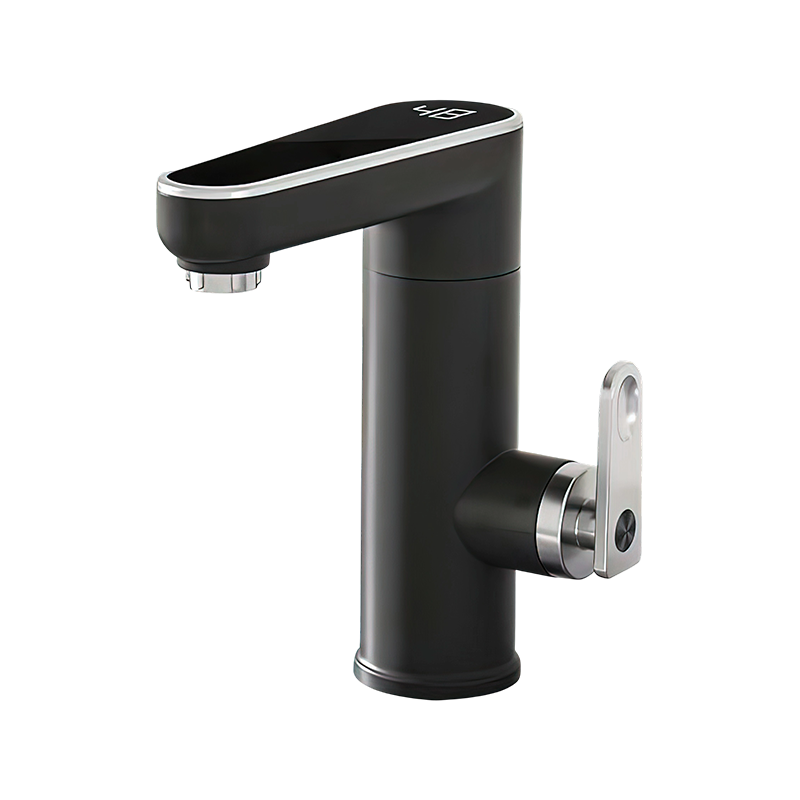 GD-01-34 ABS LED Instant Bathroom Water Heater TapABS instant bathroom heater tap with LED temperature display, 120-degree rotating spout, and safety protections; suited to private-label ranges with customizable aerator and restrictor.View Product →
Compact bathroom models such as this ABS unit are the natural entry point for private label ranges, since the aerator pocket, restrictor and LED display can all be customised without changing the mould. From our Ningbo factory, with 10,000 square metres of floor space, around 200 staff and capacity of two million units a year, we handle OEM and ODM work from a drawing or a supplied sample, which is usually the fastest route for a distributor who wants a specific flow class and thread combination rather than a catalogue item.
A written flow tolerance and a stated thread are worth more than any brochure claim, and they are the two lines a supplier will be judged on at incoming inspection.
Installation and Retrofit: A Practical Checklist
Replacing an aerator takes a few minutes, but the order of operations decides whether it seals first time. The checklist below is the one we give to installation teams working with instant heating taps, where a leak at the spout is not just a drip but a safety issue near electrical components.
- Close the water supply and open the tap briefly to release pressure before unscrewing anything.
- Remove the old aerator with a proper key; if it is seized, soak the spout tip in citric acid rather than forcing it.
- Clean the spout thread with a soft brush and inspect for crossed or flattened threads.
- Fit the correct washer or O-ring for the thread gender, and confirm it seats without twisting.
- Hand-tighten the new aerator, then add a quarter turn with the key. Do not exceed the torque stated for the body material.
- Open the supply slowly and check for weeping at the thread before restoring full pressure.
- Run the tap for 30 seconds and check the stream shape, splash pattern and flow, measured with a graduated container and a stopwatch.
- On an instant electric tap, confirm the outlet temperature at the intended flow rate before handing over to the user.
For retrofit projects where the existing spout thread is unknown, a small thread gauge set pays for itself within a week. Where the tap is being replaced entirely, quick-connection models reduce the installation window and remove the risk of a wrongly sized supply hose. A typical example is the quick free installation range, which is designed for fast connection without specialist tools.
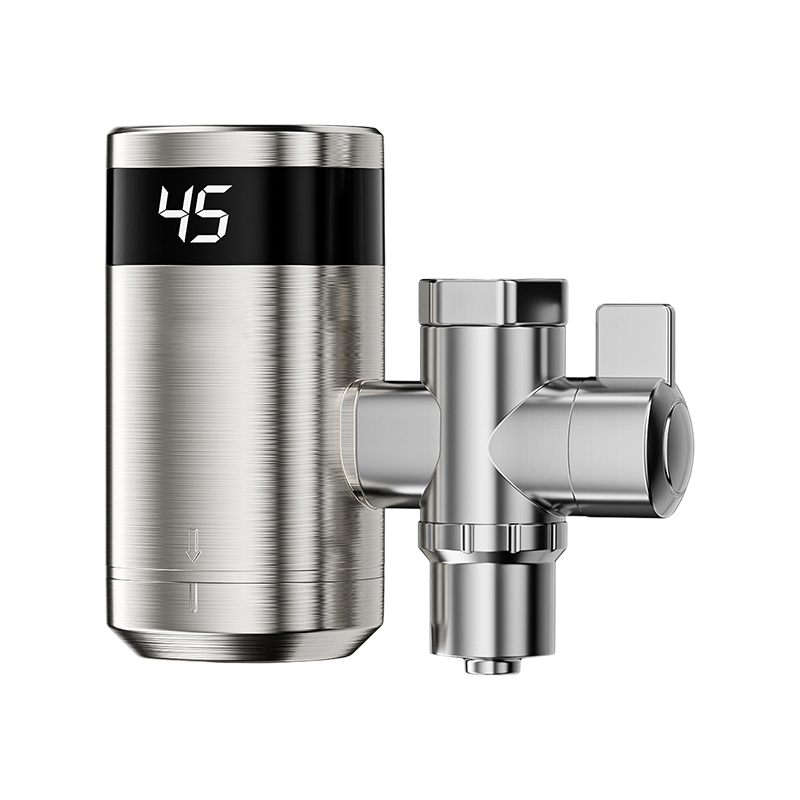 BSJ-04-34 Stainless Steel Fast-Connecting Instant Heating FaucetStainless steel fast-connection instant heating faucet with LED temperature display and multiple safety protections for retrofit projects needing quicker installation and shared restrictor servicing.View Product →
That model combines the stainless steel body, LED temperature display and fast connection in one unit, and its aerator pocket accepts the same restrictor family as the rest of the range. Keeping one restrictor tool and one spare-parts box across a building is a small detail that shortens every future maintenance visit.
Measure flow and temperature after every aerator change, because a correct thread with the wrong restrictor still produces a complaint.
Frequently Asked Questions About Bathroom Faucet Aerators
What does a bathroom faucet aerator actually do?
It limits the maximum flow through the spout, mixes air into the stream so the water feels fuller, and shapes the jet so it does not splash out of the basin. The mesh stack also traps grit and scale before they reach the cartridge.
How do I identify the thread size I need?
Measure the outside diameter of a male thread or the inside diameter of a female thread with a caliper. Common results are 24 mm, 22 mm, 20 mm, 18.5 mm and 16.5 mm. Confirm the gender by checking whether the thread sits on the outside of the aerator shell or inside it.
Can I fit a lower-flow aerator to an instant electric faucet?
Usually yes, and it is often the correct move. Lower flow raises the temperature rise across the element, so a 2 l/min restrictor can turn a lukewarm 3.4 kW tap into a comfortable one. Do not go so low that the flow switch cannot detect water, and check the minimum activation flow in the product data.
Why did the flow drop suddenly after a few months?
Almost always scale or sediment on the mesh, or debris introduced during plumbing work. Unscrew the aerator, rinse the stack in reverse flow and soak it in citric acid. If flow stays low after cleaning, check the inlet filter and the cartridge.
Do aerators work with tankless and instant heaters?
They work well, provided the restrictor is matched to the heater capacity. The aerator sits downstream of the heating chamber and does not affect how the water is heated, but it strongly affects the temperature the user feels, because temperature rise is inversely related to flow.
Are aerators required by regulation?
Flow limits for taps are regulated in many markets, and the aerator is the usual way to comply. The exact ceiling varies by country and by building type, so confirm the local requirement before fixing a flow class in a specification.
How often should an aerator be replaced?
In soft water, cleaning is usually enough and the part lasts for years. In hard water, replacing the insert every 12 to 24 months is sensible, and keeping a spare in the building is cheaper than an emergency call-out.
Nearly every aerator complaint resolves to one of three causes: wrong thread, blocked mesh, or a restrictor that does not match the heater.
Getting the Aerator Right the First Time
The bathroom faucet aerator is a component where small decisions travel a long way. A thread recorded correctly removes a returns category. A flow class matched to the local regulation turns a water-saving claim into a measurable number. A restrictor matched to the heater wattage and the coldest inlet temperature changes how an instant electric tap is judged by the person using it every morning.
For buyers, the practical sequence is short: measure the spout, decide the flow class from the heater and the local rule, choose brass or engineering plastic according to the water chemistry, and write the tolerance on the drawing. For distributors and private label programmes, standardising the aerator pocket across a range keeps spares simple and makes it possible to ship the same tap body to markets with very different water and climate conditions.
If you are specifying instant heating taps and want the aerator, restrictor and display configuration set for your market, our team can work from your drawing or a sample and confirm flow, temperature rise and thread before tooling starts.



NINGBO MAITENG ELECTRIC APPLIANCE CO., LTD. integrates production and sales. The company adopts a dual model of self-management and distribution sales.
- CONTACT INFO
-
NO.8 Yaobei Avenue,Simen Town, Yuyao City, Ningbo City, Zhejiang, China
-
 +86-159 5821 2132
-
 +86-574-62178444
-
 +86-159 5821 2132
-
 [email protected]
-
- SCAN IT
-
Mobile terminal

