


 English
 Español

3-Way Filtered Drinking Water Kitchen Faucet: Buyer's Guide for Wholesalers
Date:2026-11-17
Content
- 1 What a 3-Way Filtered Drinking Water Kitchen Faucet Actually Does
- 2 Selection Criteria That Matter on the Factory Floor and at the Sink
- 3 Filtration, Flow, and Hot Water: Where Budget Models Fail
- 4 Installation and Compatibility Checks Before You Order
- 5 Safety and Certification: What to Ask a Manufacturer or Supplier
- 6 Sourcing Strategy for Wholesalers and Brand Buyers
- 7 Frequently Asked Questions
- 7.1 Is a 3-way filtered drinking water kitchen faucet compatible with an under-sink RO system?
- 7.2 Can one faucet deliver instant hot water and filtered drinking water at the same time?
- 7.3 What flow rate should a wholesaler specify for filtered drinking water?
- 7.4 How do I compare a low-cost supplier with a qualified manufacturer?
A 3-way filtered drinking water kitchen faucet is not a standard single-mode tap with a filter bolted on. It is a three-function fixture that handles hot water, cold water, and filtered drinking water through separate internal paths, and the difference shows up in daily use, installation space, and after-sales cost. For buyers, the practical answer is simple: specify the filtration route, the hot-water power, and the deck cutout before you compare prices. A faucet that looks similar in photos can fail at the first site visit if the filtered line is restricted, the heater draws more current than the circuit allows, or the spout cannot swing over a double sink.
Most kitchen projects do not need a laboratory-grade water system, but they do need predictable performance. A family filling a pot for pasta wants fast hot water. A tenant refilling a bottle wants a clean-tasting stream that does not splash. A maintenance team wants a cartridge and filter that can be replaced without removing the whole fixture. These are practical requirements, and they are the reason a three-way faucet should be selected as a system rather than as a finished metal shape.
Strong conclusion: Match the three water paths to the real daily routine, then verify power, cutout, and filtration compatibility before price.
What a 3-Way Filtered Drinking Water Kitchen Faucet Actually Does
The three modes are usually hot, cold, and filtered. The filtered stream should pass through a dedicated cartridge or inline filter, and the spout should have a separate lever or handle. The important detail is cross-flow. A good design keeps filtered water from mixing with hot water in the body. This matters for taste and for safety. If the filtered line shares a chamber with hot water, the first cup after a hot draw can be warm, and the filter may see temperatures above its rating.
For a manufacturer or supplier, the three-way label should be backed by a clear internal layout. Ask for a section drawing, the filter cartridge specification, and the maximum incoming water pressure. A 3-way filtered drinking water kitchen faucet used with an under-sink RO system needs a compatible outlet pressure and a backflow preventer where local code requires it. The faucet itself should not be asked to compensate for a poor filtration design.
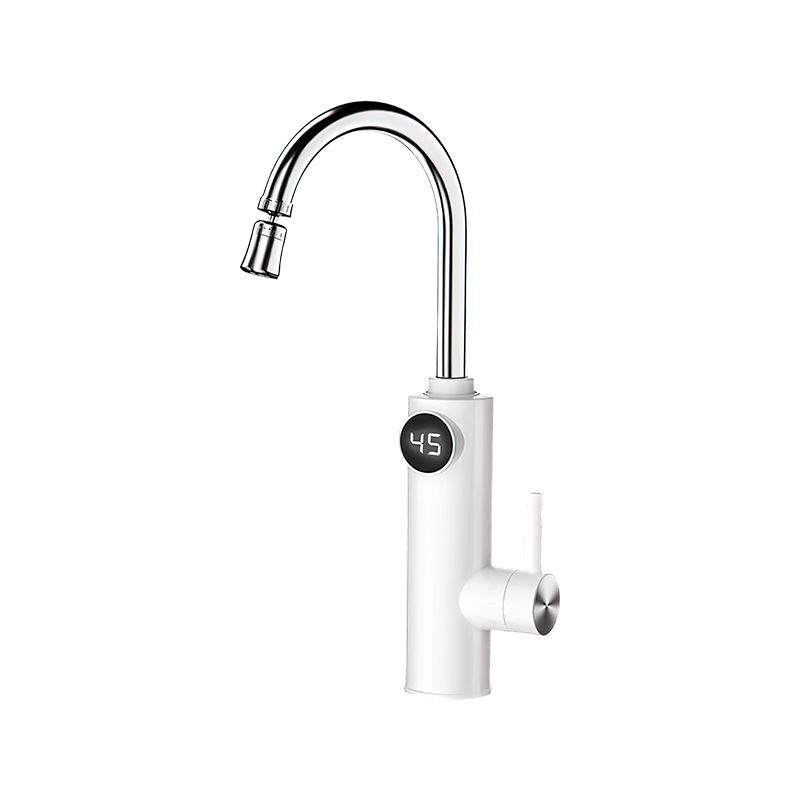
 SS-12-34 LED Instant Heating Three-Way Filtered Kitchen FaucetCombines instant heating, hot/cold water, and multi-stage filtration in one ABS/stainless-steel tap; review its pressure and filter specifications for point-of-use kitchen installations.View Product →
Models such as the SS1234 combine LED display, instant heating, and hot-cold-filtered water routing in one kitchen tap. That combination is useful in apartments, staff kitchens, and small food-prep areas where a separate boiler and a separate drinking tap would consume too much counter space. It is not a substitute for a full commercial filtration plant, but it can simplify the point of use.
Strong conclusion: The three water paths must stay separate inside the body; otherwise the filter and the user both pay for it.
Selection Criteria That Matter on the Factory Floor and at the Sink
A buying sheet should be short enough to use. In practice, five columns catch most costly mistakes: filtration stage, flow rate, hot-water power, deck interface, and service access. The table below is a working comparison, not a marketing summary. Use it during sample approval and again before mass production.
| Check | Target or question | Why it matters |
|---|---|---|
| Filtration route | Carbon block, RO, or composite? Is the filtered outlet separate from hot and cold? | Taste, filter life, and cross-contamination risk. |
| Flow rate | 1.5 gpm filtered, 1.8 gpm mixed, or project-specific? | Filling pots and bottles without a weak stream. |
| Hot-water power | 3000W or 3400W at rated voltage; confirm circuit breaker. | Too much draw trips protection; too little feels slow. |
| Deck cutout | 35 mm or 42 mm hole; deck thickness range; escutcheon size. | Avoid drilling surprises and rocking fixtures. |
| Service access | Cartridge, filter, and inlet connections reachable from below. | Lower maintenance time and fewer callbacks. |
The table is deliberately blunt. A low price often hides a narrow filter cartridge, a plastic diverter, or a hot-water path that shares too much metal with the filtered path. Those choices may pass a quick bench test and still fail after six months of daily use. A qualified manufacturer should be able to show the cartridge model, the rated pressure, and the material grade for wetted parts.
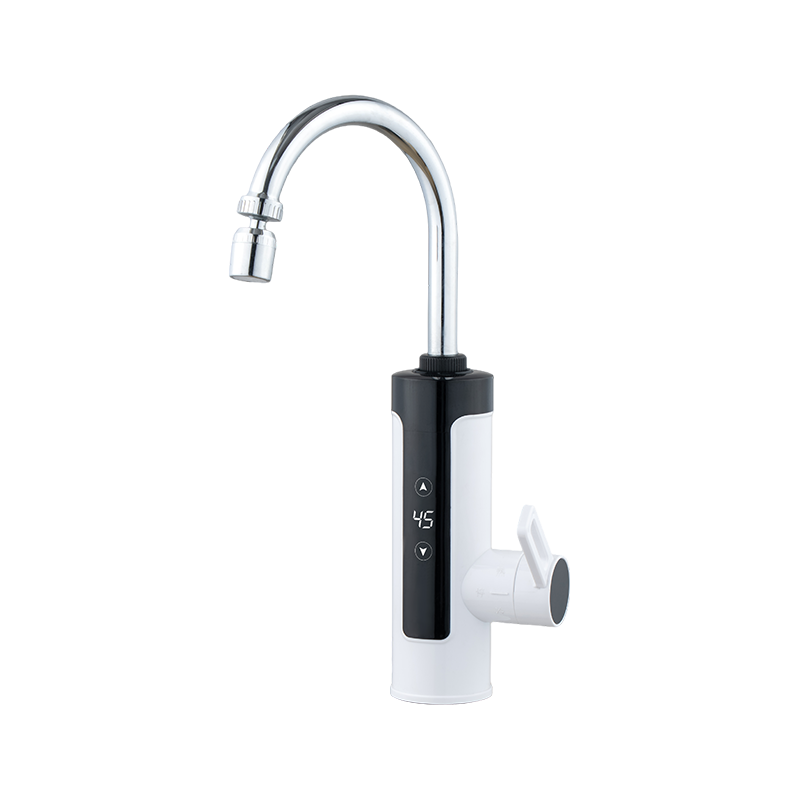
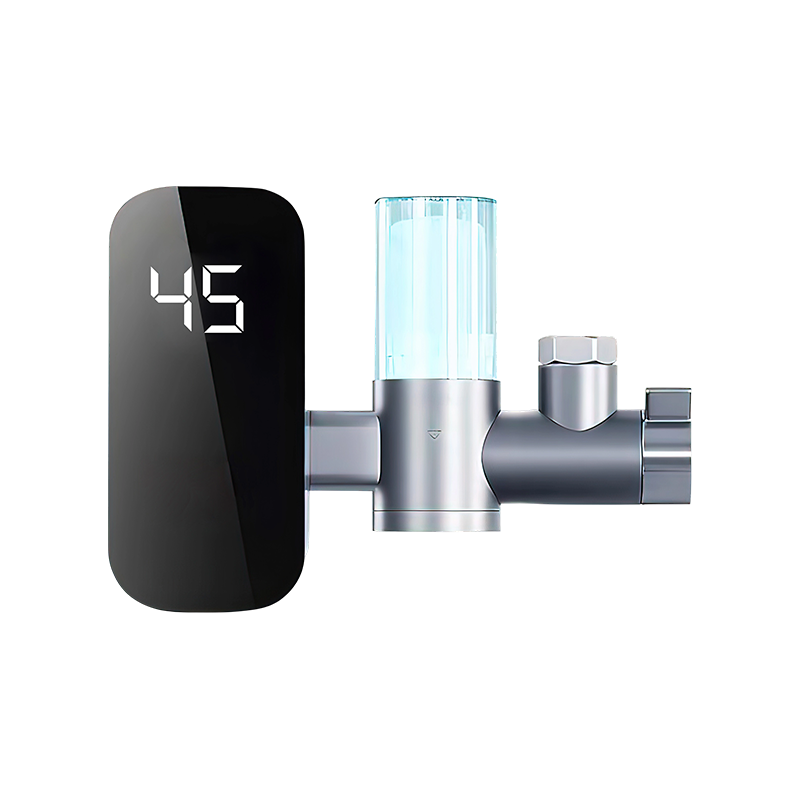 GD-04-34 Built-In Filtered Instant Hot Water Kitchen FaucetCompact ABS electric heating tap with built-in six-layer filtration; check its stated filter capacity and replacement interval before choosing it over separate under-sink filtration.View Product →
The GD0434 is an example of a built-in filtration approach in an ABS electric kitchen heating tap. It is aimed at buyers who want a compact point-of-use unit rather than a separate under-sink filter housing and a third tap. The trade-off is that the filter capacity and replacement interval must be stated clearly, because a compact unit will not match a large whole-house cartridge.
Strong conclusion: Approve the sample against a written five-point sheet; a photo and a price list cannot confirm flow, cutout, or service access.
Filtration, Flow, and Hot Water: Where Budget Models Fail
Budget models usually fail in one of three places: the diverter, the filter head, or the thermal path. The diverter is the part that switches between hot, cold, and filtered water. If it is molded from a soft material or lacks a clear stop, it can creep over time and allow a warm blend into the filtered stream. The filter head is the next weak point. A generic housing may accept a cartridge, but if the inlet and outlet ports are small, the filtered flow drops as the cartridge loads. The thermal path matters because hot water and filtration do not share the same tolerance for temperature.
The chart below shows how buyers in this category tend to weight the decision. It is a practical ranking, not a laboratory measurement. Use it to challenge a quotation that is unusually low on one line item.
Buyer priorities for 3-way filtered kitchen faucets
Filtration performance
92
Installation compatibility
86
Hot-water speed
78
Certification and safety
74
Service and spare parts
68
Price
55
The ranking helps explain why a faucet with a strong heater but a weak filter head still loses in repeat orders. Filtration performance sits at the top because the filtered stream is the reason the product exists. Installation compatibility follows closely, since a three-way faucet is often retrofitted into an existing 35 mm hole. Hot-water speed and safety are close behind. Price is important, but it is rarely the only reason a wholesaler or brand buyer rejects a sample.
For the manufacturer, the chart points to a design rule: do not let the filtered path become an afterthought. In a point-of-use unit such as the SS1234 or GD0434, the filter head and heater body should be treated as separate service zones. A larger cartridge seat, a clearly marked filter lever, and a spout that can be removed for cleaning will do more for customer satisfaction than another decorative finish. The same logic applies to spare parts. A supplier that can ship a replacement cartridge, aerator, and diverter body within a predictable lead time is easier to scale with than one that only sells complete faucets.
Strong conclusion: The filtered path is the product's reason to exist; if it is restricted or hard to service, the whole faucet feels cheap.
Installation and Compatibility Checks Before You Order
Installation is where a good specification meets the real countertop. Start with the deck. A 3-way filtered drinking water kitchen faucet often needs a 35 mm or 42 mm hole, but the escutcheon and the under-sink body may require more clearance than the hole itself. Check the deck thickness range, the distance to the backsplash, and whether the handle can rotate without hitting a window frame. For a double sink, confirm the spout reach and swing. A 360-degree rotatable spout is useful, but it must stop firmly at the end of travel.
Next, check the under-sink space. The filter housing, the hot-water inlet, and the electrical connection all compete for the same cabinet. If the faucet uses instant electric heating, the circuit must be dedicated or at least sized for the rated load. A 3000W unit on a shared kitchen circuit may trip the breaker when the kettle is running. The installation manual should state the minimum wire gauge, the required earthing, and the clearance around the heater body. For export orders, confirm the plug type, voltage, and certification mark before production.
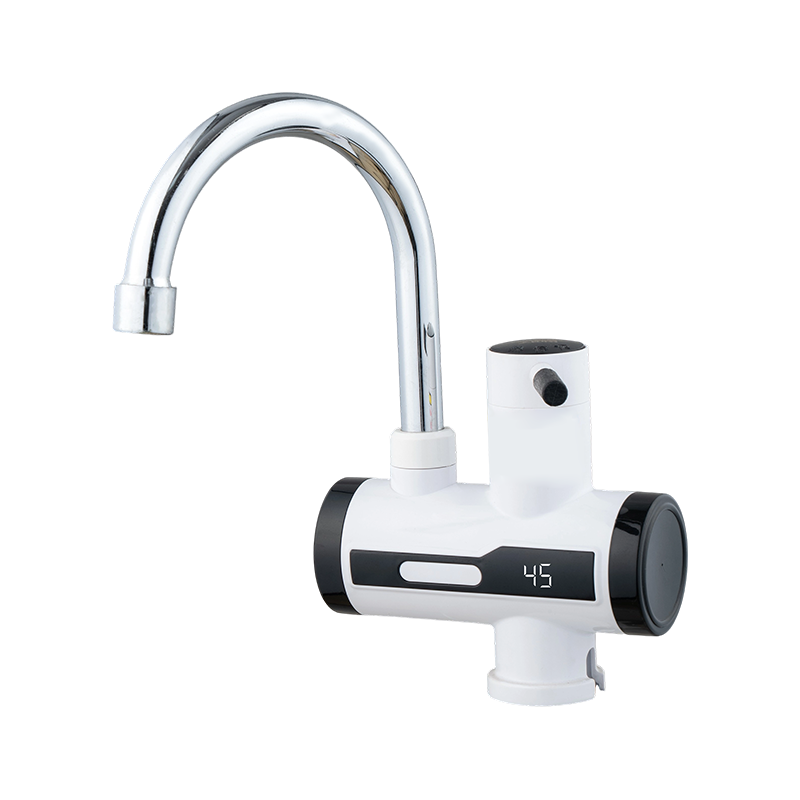 TJH-02X Smart Instant Hot Water Kitchen FaucetSingle-faucet electric heater with smart temperature control and overheating protection; confirm sink-hole size, under-sink clearance, and dedicated circuit for its 3000W load.View Product →
The TJH02X is a smart kitchen tap with a single faucet hot-water heater layout. It suits projects that want a compact electric heating point without a separate wall-mounted heater. The installation check is still the same: measure the hole, measure the cabinet, and confirm the electrical supply. A smart label does not remove the need for a physical survey.
Strong conclusion: Measure the deck, the cabinet, and the circuit before the sample is approved; installation surprises are more expensive than a slightly higher unit price.
Safety and Certification: What to Ask a Manufacturer or Supplier
Safety questions should be specific. "Is it safe?" is too broad. Ask which wetted materials are lead-free, whether the filtered path has a backflow preventer, and what happens if the heater runs dry. A responsible manufacturer should provide a material declaration, a test report for the relevant standard, and a clear statement of the maximum inlet pressure and temperature. For drinking-water contact, look for NSF/ANSI 372 or an equivalent lead-free compliance claim. For electrical safety, CE and ISO 9001 are useful baseline signals, but they do not replace a review of the actual circuit and thermal protection.
The following checks are practical:
- Leak protection: does the unit cut power or close the inlet when a leak is detected?
- Dry-burn protection: does the heater shut off when the water supply stops?
- Over-temperature protection: is there a thermal cut-out independent of the control board?
- Filter bypass: can the user switch to unfiltered water without tools if the cartridge fails?
- Marking: are the model, voltage, power, and pressure ratings visible on the body or label?
A supplier that answers these questions with documents is easier to audit than one that answers with adjectives. This is especially important for wholesalers and brand buyers who carry the after-sales risk in their own market. The cheapest unit can become the most expensive one if a batch fails a leak test or a material declaration.
Strong conclusion: Ask for documents on lead-free wetted parts, dry-burn protection, and over-temperature cut-out; labels and adjectives are not a safety file.
Sourcing Strategy for Wholesalers and Brand Buyers
A 3-way filtered drinking water kitchen faucet sits at the intersection of three supply chains: faucet bodies, filtration cartridges, and electric heating components. That makes supplier selection more important than for a simple cold-water tap. A wholesaler needs stable cartridge availability. A brand buyer needs consistent finish and packaging. An OEM project needs a manufacturer that can work from drawings or samples and keep the wetted-material specification unchanged between pilot and mass production.
The practical sourcing sequence is to qualify the factory, then the product. Ask for the production area, the quality organization, the annual capacity, and the main export markets. Confirm whether the factory makes the heater, the faucet body, or both. A supplier that assembles from mixed sources can still be a good partner, but the incoming inspection plan must be clear. For buyers new to the category, a factory visit or a live video audit of the leak test and aging line is more useful than a catalogue.
Useful next steps: Request a quote and share your deck cutout, filtration route, and target power rating. For usability notes on electric faucets, read how easy an electric water faucet is to use.
MOQ, lead time, and spare-parts policy should be negotiated together. A low MOQ with no cartridge supply is a short-term win. A slightly higher MOQ with a documented replacement-part list is easier to grow. If the project needs private labeling, confirm the logo method, the packaging artwork approval flow, and the warranty terms in writing. These details protect both the supplier and the buyer when the first container arrives.
Strong conclusion: Qualify the factory and the spare-parts system together; a faucet is only as good as the cartridge and service behind it.
Frequently Asked Questions
Is a 3-way filtered drinking water kitchen faucet compatible with an under-sink RO system?
Usually yes, if the faucet's filtered inlet is rated for the RO outlet pressure and the system includes a suitable storage tank or pressure regulation. Check the filter cartridge compatibility and the maximum pressure. A direct-connect RO line without a tank may not deliver enough flow for a steady drinking stream. Confirm with the faucet manufacturer before ordering.
Can one faucet deliver instant hot water and filtered drinking water at the same time?
It can deliver either function through separate internal paths, but not necessarily at full flow simultaneously. The diverter selects one route at a time on most designs. If the project needs continuous hot and filtered output at the same time, specify a dual-outlet fixture or separate taps. Clarify the intended use during sample approval.
What flow rate should a wholesaler specify for filtered drinking water?
A practical target is around 1.5 gpm for the filtered stream, with a mixed flow near 1.8 gpm, but the final number depends on the cartridge and local pressure. Low flow is a common complaint in retrofit projects. Test the sample at the actual site pressure, not only on a bench with a high-pressure supply.
How do I compare a low-cost supplier with a qualified manufacturer?
Compare the wetted-material declaration, the leak test standard, the cartridge supply policy, and the warranty response time. A low-cost supplier may offer a similar appearance, but the internal diverter and filter head often reveal the difference. Ask for a sample teardown and a spare-parts list. A manufacturer with ISO 9001 and a clear quality organization is easier to audit.
Strong conclusion: Use the FAQ as a pre-order checklist; the answers should come from documents and samples, not from a chat message.
A 3-way filtered drinking water kitchen faucet is a small fixture with a large specification surface. The successful projects are not the ones with the lowest quotation; they are the ones where the filtration route, the hot-water load, the deck cutout, and the spare-parts plan were settled before the first production run. That is the difference between a faucet that sells once and a category that earns repeat orders.
Strong conclusion: Settle the specification before the price, and the faucet will perform as a system rather than a collection of parts.



NINGBO MAITENG ELECTRIC APPLIANCE CO., LTD. integrates production and sales. The company adopts a dual model of self-management and distribution sales.
- CONTACT INFO
-
NO.8 Yaobei Avenue,Simen Town, Yuyao City, Ningbo City, Zhejiang, China
-
 +86-159 5821 2132
-
 +86-574-62178444
-
 +86-159 5821 2132
-
 [email protected]
-
- SCAN IT
-
Mobile terminal

