


 English
  Español
What Should You Look for When Buying an Instant Hot Water Faucet?
Date:2026-06-16
Content
- 1 How Instant Electric Water Faucets Work
- 2 Key Buying Criteria: What Separates a Good Faucet from a Great One
- 3 Energy Efficiency: The Financial Case for Going Tankless
- 4 Safety Features You Should Require
- 5 Temperature Control and User Comfort
- 6 Installation and Suitability Across Different Settings
- 7 Product Lineup: Maiteng SS Series
- 8 Market Adoption: Who Is Buying Instant Electric Faucets
- 9 About NINGBO MAITENG ELECTRIC APPLIANCE CO., LTD.
- 10 Frequently Asked Questions
- 10.1 Q1: How long does it take an instant electric water faucet to deliver hot water?
- 10.2 Q2: Is it safe to use an electric faucet in a kitchen or bathroom?
- 10.3 Q3: How much energy does a tankless electric faucet save compared to a storage heater?
- 10.4 Q4: Can I install an instant hot water faucet myself, or do I need a plumber?
- 10.5 Q5: What temperature range can I set on a modern electric heating faucet?
- 10.6 Q6: What maintenance does an instant electric water heater faucet require?
Choosing the right instant hot water faucet can transform how your kitchen or bathroom operates. Instant electric water faucets eliminate the need for waiting, preheating, or storing hot water, delivering usable hot water in as little as 3 seconds. This guide provides clear, data-backed guidance on what features, safety standards, and performance metrics actually matter when selecting a tankless electric faucet for residential or commercial use.
The instant hot water tap market has grown substantially over the past decade, driven by increased demand for energy-efficient and space-saving water heating solutions. Based on industry data, instant electric faucets can reduce household hot water energy consumption by 30% to 50% compared to traditional tank-based heaters, largely by eliminating standby heat loss. This makes the energy saving electric faucet category one of the most compelling product upgrades for modern homes and businesses.
How Instant Electric Water Faucets Work
An electric water faucet uses an internal heating element, typically a magnesium oxide powder-insulated heating tube, to heat cold water on demand as it passes through the unit. When you turn on the tap, a water pressure switch or flow sensor immediately activates the heating circuit. Water runs through the heating chamber, reaches the target temperature within 3 to 5 seconds, and flows out the spout without any delay associated with storage tank warm-up cycles.
The core engineering principle is water-electricity separation: the electrical components never come into contact with the water supply. This insulated design is what allows an electric heating faucet to operate safely even in humid kitchen and bathroom environments. When the faucet is shut off, the sensor cuts power instantly, so there is no residual heating and no energy waste.
Unlike a conventional water heater that stores 20 to 80 liters of pre-heated water, a tankless faucet has no storage volume. This eliminates the risk of bacteria accumulation in stagnant water, removes the need for periodic tank flushing, and dramatically reduces the physical footprint of the appliance.
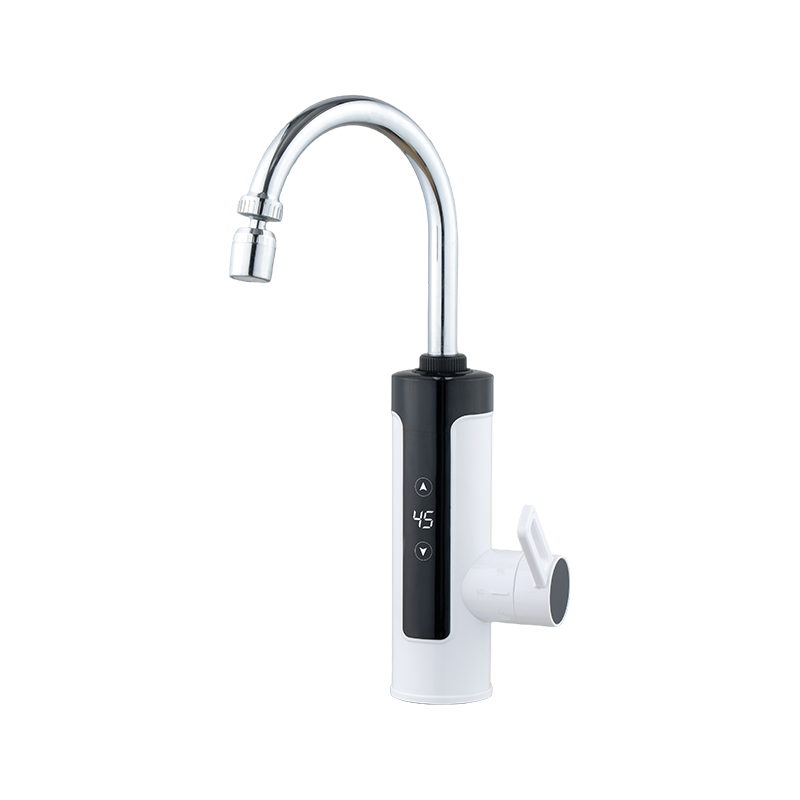
The diagram above illustrates the principal components of a modern instant electric water heater faucet: the heating chamber, LED temperature display panel, flow sensor, and chrome spout. Each component is purpose-designed for the instant-on, tankless heating workflow. The flow sensor activates the internal heating tube the moment water movement is detected, and cuts power immediately upon shut-off to maximize energy efficiency and eliminate any risk of overheating.
Key Buying Criteria: What Separates a Good Faucet from a Great One
When evaluating a hot water faucet for purchase, buyers should focus on five core areas: heating speed, temperature control range, safety certifications, installation type, and energy efficiency rating. Each factor directly impacts long-term performance, cost, and user satisfaction. The table below summarizes what to look for in each category.
| Criterion | What to Look For | Why It Matters |
|---|---|---|
| Heating Speed | 3 to 5 seconds to hot water | Eliminates wait time and water waste |
| Temperature Range | 30 degrees C to 50 degrees C adjustable | Suits diverse tasks from rinsing to washing |
| Safety Certifications | CE, IPX4, leakage protection | Ensures safe operation in wet environments |
| Installation | Single-hole mount, no specialist required | Lowers upfront cost and downtime |
| Energy Rating | Class I national efficiency standard | Up to 50% less energy vs. tank heaters |
Buyers interested in a countertop hot water faucet should also confirm compatibility with their existing water pressure system, since most instant electric models operate reliably across a wide range of inlet pressures. Unlike tank-style heaters, most tankless electric faucets maintain consistent outlet temperature even when inlet pressure fluctuates, which improves comfort particularly in multi-point water supply systems.
Energy Efficiency: The Financial Case for Going Tankless
One of the most compelling arguments for switching to an instant hot faucet is the reduction in ongoing energy expenditure. Traditional electric storage heaters incur energy costs in three stages: initial heat-up, maintaining water temperature during standby (which can run 24 hours a day), and re-heating after hot water is drawn. By contrast, a tankless unit only consumes power when hot water is actively flowing.
Industry benchmarks suggest an average household can save between 30% and 50% on water heating electricity costs annually by switching to an energy saving electric faucet. In regions with higher electricity tariffs, this translates into meaningful monthly bill reductions. The chart below illustrates a comparative energy consumption breakdown across three heating scenarios.
The chart above draws on illustrative industry estimates to contextualize typical annual energy consumption differences between heating technologies. A conventional electric storage heater running continuous standby consumes an estimated 1,800 kWh per year for a typical household, while gas instantaneous units fall around 1,300 kWh energy-equivalent. The electric instant faucet category, by eliminating standby losses entirely, comes in around 900 kWh, representing a 50% reduction versus storage electric options. For commercial settings such as restaurants, hotels, and offices with higher hot water demand, the savings multiple is even greater. Over a five-year product lifespan, those recurring savings can significantly offset the upfront product cost. Combined with compliance to Class I national energy efficiency standards, the kitchen hot water faucet category aligns well with global sustainability expectations.
Safety Features You Should Require
Safety is non-negotiable in any appliance combining electricity and water. Quality instant electric water heater faucets incorporate multiple independent protection layers that collectively eliminate common electrical hazards.
- Water-electricity separation technology: The heating element is encased in insulating material (typically MgO powder) so the water flow path is completely isolated from electrical conductors.
- Anti-leakage protection device: A residual current device (RCD) circuit shuts off electricity immediately upon detecting any leakage current, preventing electric shock.
- Over-temperature auto shut-off: If the outlet water temperature exceeds the safe maximum threshold, the unit cuts power automatically to prevent scalding.
- IPX4 waterproof certification: This international standard confirms the unit can withstand water splashing from any direction, making it safe for kitchen sink and bathroom basin installation.
- No-flow auto power-off: The flow sensor disengages the heating circuit the instant flow stops, ensuring no power is wasted and no dry-firing risk exists.
Always verify that a prospective electric faucet carries verifiable CE certification and conforms to the safety standards relevant to your market. CE marking is mandatory for products sold in the European Economic Area and provides assurance that the manufacturer has met essential health, safety, and environmental protection requirements. ISO 9001 quality management certification from the manufacturer additionally indicates a disciplined production process with documented quality controls at each stage.
The radar diagram above illustrates how a well-specified instant electric water heater faucet outperforms traditional storage electric heaters across all five core safety dimensions. The instant faucet scores particularly high on water-electricity separation and leakage protection, both of which are structural advantages of the tankless architecture rather than add-on features. Storage heaters, by contrast, maintain a body of water in continuous contact with heating elements over time, increasing the cumulative risk of scale formation, material degradation, and bacterial proliferation. The hygiene advantage of tankless technology is increasingly recognized by health-conscious consumers and hospitality operators who manage multiple bathroom and kitchen points simultaneously. Taken together, the five safety axes reinforce the argument that a certified electric water faucet is the technically superior choice for wet-environment hot water delivery.
Temperature Control and User Comfort
A defining advantage of modern electric heating faucets is their precise, adjustable temperature output. Premium models allow users to set outlet temperatures in increments from as low as 30 degrees C up to 50 degrees C, covering the full practical range from comfortable handwashing to effective kitchen degreasing. This precision eliminates the cold-to-hot temperature shock commonly experienced with storage heaters when the tank temperature is not well-calibrated.
Critically, the water temperature of a quality instant hot water tap remains stable regardless of fluctuations in inlet water pressure. Many plumbing systems, especially in apartment blocks or commercial buildings, experience significant pressure variation throughout the day. Traditional mixer tap configurations are highly sensitive to these changes and can produce uncomfortable swings between hot and cold. Tankless heating bypasses this issue by adjusting the heating element output in real-time to maintain the target temperature at the outlet.
The line chart above uses illustrative representative data to contrast the temperature output consistency of an instant electric faucet versus a storage-type heater during a typical 30-minute kitchen use session. The instant hot faucet maintains a constant 45 degrees C throughout the entire session, showing no drift regardless of draw events. The storage heater, by contrast, exhibits characteristic temperature fluctuations as hot water is drawn, cold water enters the tank, and the heating element cycles on and off. These swings, sometimes spanning 10 to 15 degrees C within a few minutes, are a common source of user discomfort. For tasks requiring consistent water temperature, such as brewing, food preparation, or infant bathing, this variability is a meaningful performance disadvantage. The flat delivery curve of the electric faucet is one of the most frequently cited reasons buyers upgrade from storage to tankless technology in consumer surveys.
Installation and Suitability Across Different Settings
One of the practical benefits of an instant electric water heater faucet is its straightforward installation process. Most models require a single mounting hole in the sink or basin, a standard water supply connection, and access to an appropriate electrical circuit. Unlike storage heaters that may require dedicated large-capacity wiring and substantial wall space, an instant faucet typically mounts directly at the point of use and can often be set up by a competent DIY installer without specialist tools.
The column chart above compares installation complexity across three water heating categories using illustrative time and cost index values. The kitchen hot water faucet category demands the least installation time, averaging under one hour for a straightforward replacement of an existing tap, while gas appliances require the most labor and specialist involvement. This efficiency makes the instant electric faucet category particularly attractive for hospitality operators, property managers, and DIY homeowners who want to minimize disruption. The low installation burden also means the device is highly portable between locations, which is valuable for short-term rental operators and businesses that periodically reconfigure their kitchen or bathroom layouts. For home use, the single-hole design of many models fits existing kitchen sinks without modification, eliminating any countertop or cabinetry alteration.
Product Lineup: Maiteng SS Series
NINGBO MAITENG ELECTRIC APPLIANCE CO., LTD. offers a focused range of instant electric water heater faucets designed to address the core needs of both residential and light commercial buyers. The lineup includes electroplated and ABS body options, models with 360-degree rotatable spouts for flexible installation, and thermostatic variants with large LED displays for precise temperature reading. The product image below shows representative models from the current SS series.
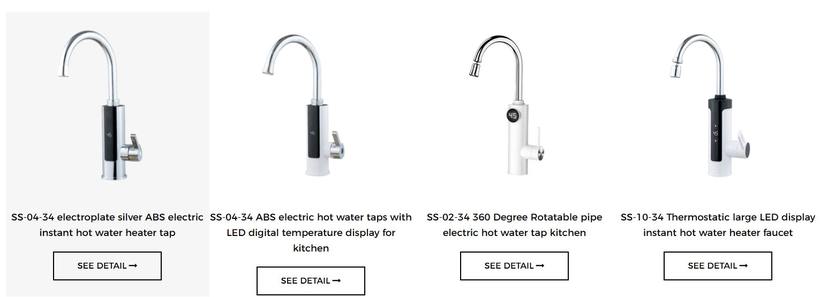
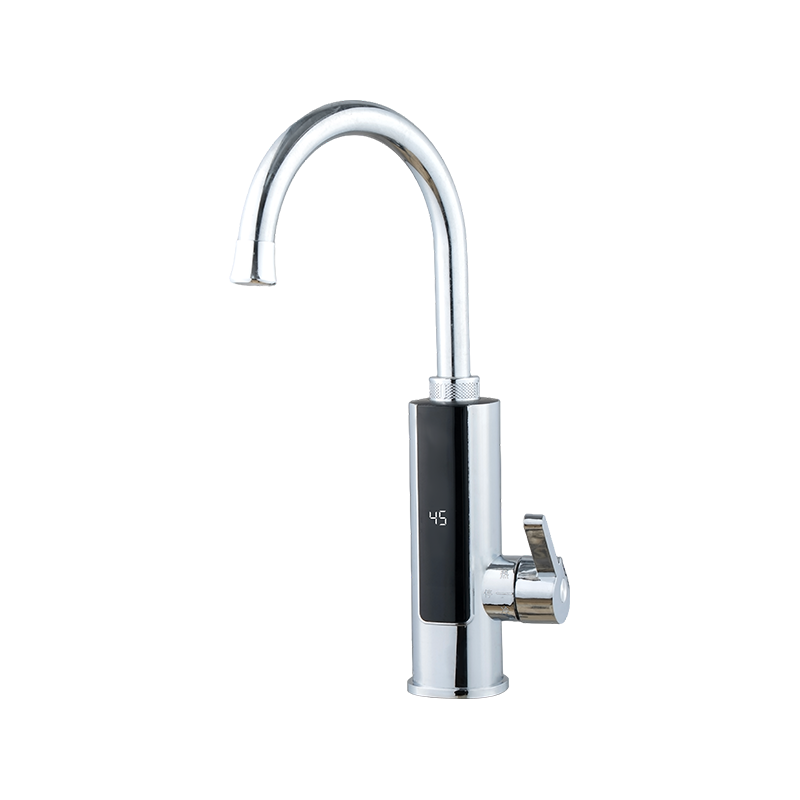
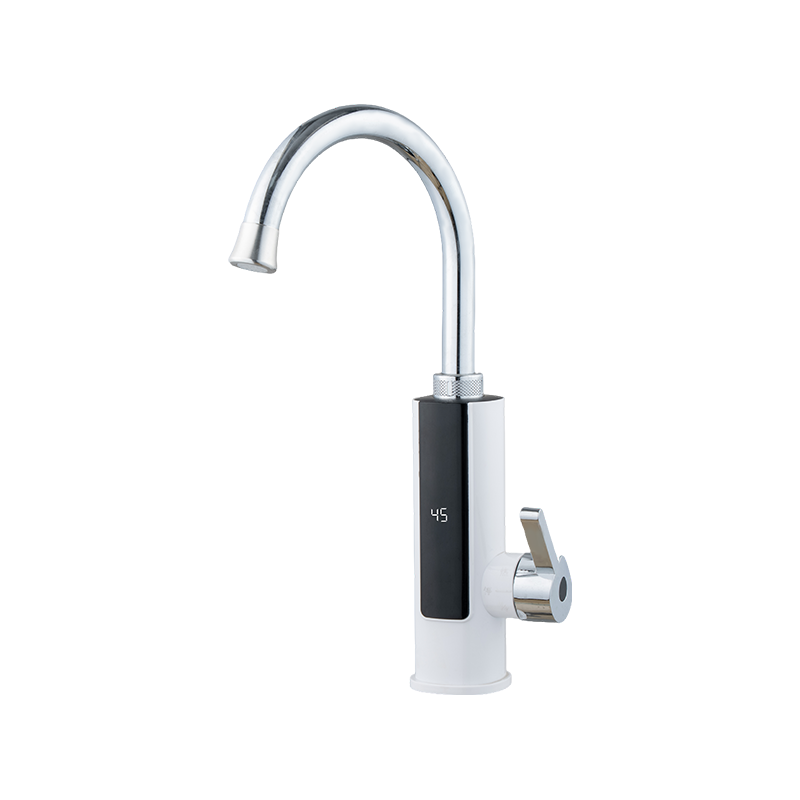
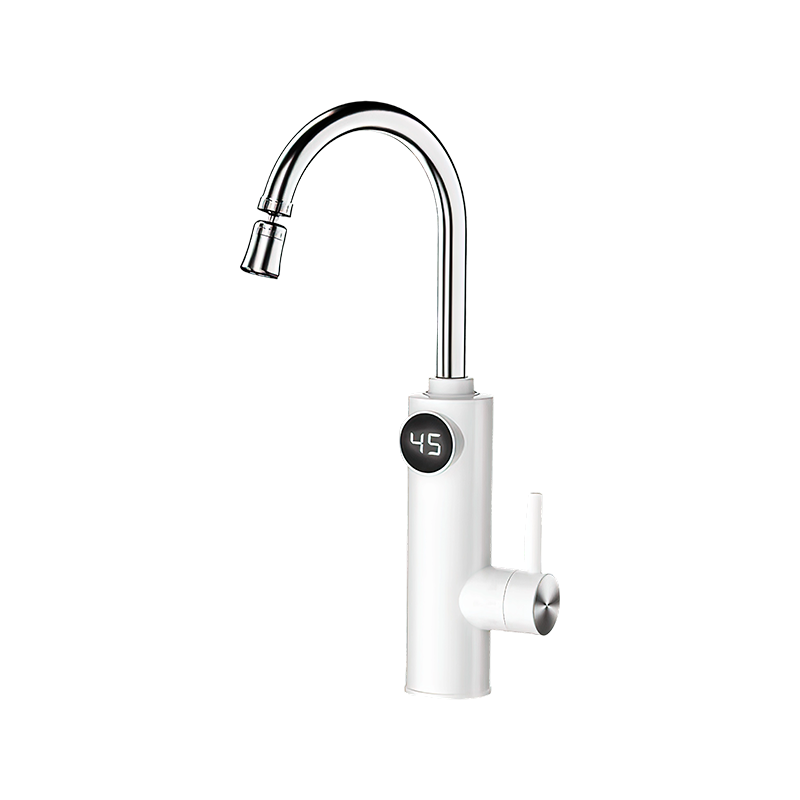
The SS-04-34 electroplate silver ABS variant exemplifies premium finish quality within a budget-conscious form factor. The SS-02-34 with 360-degree rotatable pipe connection solves installation constraints where the water supply enters from a fixed lateral position. The SS-10-34 thermostatic large LED display model addresses users who require constant visual confirmation of water temperature, including elderly users and household environments with young children. Each model incorporates the shared architecture of water-electricity separation, IPX4 waterproof certification, and CE-compliant safety circuitry that defines the Maiteng product philosophy.
Market Adoption: Who Is Buying Instant Electric Faucets
The market for tankless faucets has expanded beyond early-adopter segments and is now well-established across four primary user categories: residential kitchens, residential bathrooms, hospitality facilities (hotels and B&Bs), and small commercial operations such as offices and staff kitchens. Each of these segments has distinct usage patterns that the instant electric architecture addresses particularly well.
The donut chart above presents an illustrative breakdown of the primary end-user segments for the instant hot water tap market. Residential kitchens account for the largest share, reflecting the high frequency of short-duration hot water use for dish rinsing, food prep, and cleaning. Residential bathrooms represent the second-largest segment, driven by consumer demand for immediate hot water in morning routines. Hospitality buyers prioritize the reliability and hygiene benefits of tankless systems across multiple rooms, while commercial office buyers value the compact footprint and low maintenance cost. Regardless of segment, a consistent theme across user feedback is satisfaction with the elimination of wait time and the reduction in energy bills over the product lifecycle. The countertop hot water faucet sub-segment within the residential kitchen category has seen particularly strong growth, as consumers seek point-of-use solutions that do not require under-sink space modifications.
About NINGBO MAITENG ELECTRIC APPLIANCE CO., LTD.
Established in 2011, NINGBO MAITENG ELECTRIC APPLIANCE CO., LTD. has dedicated over a decade exclusively to the electric water heating faucet sector. Holding both ISO 9001 and CE certifications, the company operates from a 10,000-square-meter production facility staffed by 200 professionals, with an annual production capacity of 2 million units. Departments spanning sales, e-commerce, production, after-sales service, warehousing, and quality inspection ensure end-to-end accountability from raw material to delivery.
Maiteng maintains strategic partnerships with well-known domestic brands including Arrow, Konka, Sacon, Sunrain, and Royalstar, and markets its own brands Dongri Le and Aituosheng. In March 2019, the company launched its HELLO DREAM brand targeting design-forward consumers. Distribution operates through a dual model: direct self-operation and a distribution network spanning 4 Tmall stores, 5 Pinduoduo stores, 2 Taobao enterprise stores, and 1 Alibaba wholesale platform store. In 2023, Maiteng established a dedicated foreign trade department to expand its global market reach.
The company slogan - "Fast and hot life starts with me" - reflects a product-first philosophy grounded in quick thermal performance and user convenience. Maiteng welcomes factory visits and is open to exploring cooperation opportunities with international buyers, distributors, and OEM partners.
Frequently Asked Questions



NINGBO MAITENG ELECTRIC APPLIANCE CO., LTD. integrates production and sales. The company adopts a dual model of self-management and distribution sales.
- CONTACT INFO
-
NO.8 Yaobei Avenue,Simen Town, Yuyao City, Ningbo City, Zhejiang, China
-
 +86-159 5821 2132
-
 +86-574-62178444
-
 +86-159 5821 2132
-
 [email protected]
[email protected]
-
- SCAN IT
-
Mobile terminal

