


 English
  Español
Are Instant Electric water heater energy-intensive?
Date:2025-12-12
Content
- 1 The Working Principle and Necessity of High Power in Instant Electric water heater
- 2 High power consumption doesn't equal high electricity consumption: Energy consumption comparison between instantaneous and storage water heaters
- 3 How to assess the actual electricity consumption of an instantaneous water heater?
- 4 Summary: The Energy Value of Instantaneous Water Heaters
With the fast pace of life, Instant Electric water heater, with their unique advantages of "instant hot water, no waiting," are gradually becoming a new favorite for modern families' hot water solutions.
The Working Principle and Necessity of High Power in Instant Electric water heater
First, to understand energy consumption, it's essential to understand the working principle of Instant Electric water heater. Unlike traditional storage water heaters, Instant Electric water heater don't have a tank. They use built-in high-power electric heating elements to rapidly heat water the instant it flows through.
To raise the water temperature to a comfortable bathing temperature in a very short time (typically requiring an increase of 20 to 40 degrees Celsius), Instant Electric water heater generally have a high rated power, with mainstream products typically ranging from 6kW to 12kW. This high-power design ensures the "instant hot water" experience.
Tip: Due to the high power consumption, installing an instant water heater usually requires a home electrical circuit capable of supporting the corresponding current, and the use of a dedicated line and matching electricity meter.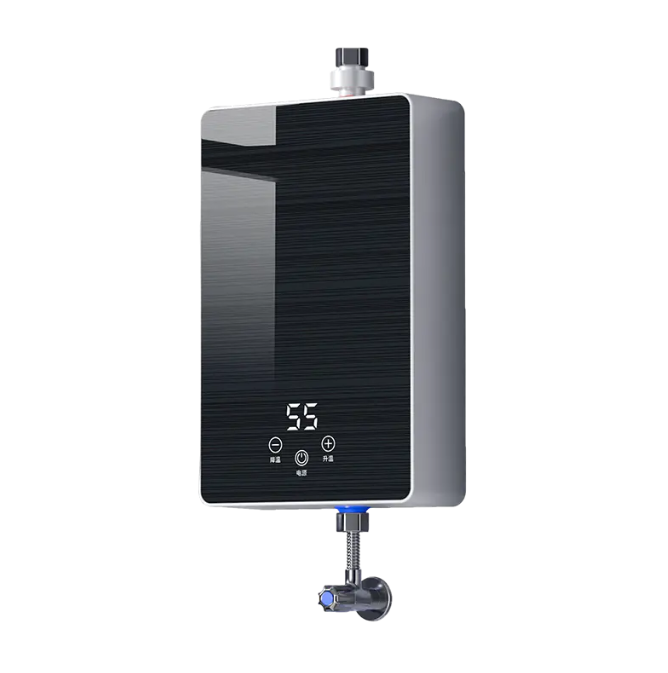
High power consumption doesn't equal high electricity consumption: Energy consumption comparison between instantaneous and storage water heaters
Many people are deterred by the high power ratings of instantaneous water heaters (often several kilowatts), assuming their electricity consumption must be enormous. However, electricity consumption (i.e., the amount of electrical energy consumed) is an indicator related to both "power" and "usage time."
While storage water heaters have lower power, they need to continuously or repeatedly heat an entire tank of water to compensate for heat loss from the tank (i.e., "standby energy consumption"), a process that consumes a significant amount of electricity.
Instantaneous water heaters, although having higher power, only operate when the tap is turned on, with a very short heating time. When not in use, they do not heat water, and their energy consumption is almost zero.
Conclusion: Under the same hot water demand, a high-quality instantaneous water heater does not necessarily have a higher total electricity consumption than a storage water heater, and may even be more energy-efficient due to the lack of heat loss. For families who shower frequently or have variable hot water needs, their energy-saving advantages are even more pronounced.
How to assess the actual electricity consumption of an instantaneous water heater?
Actual power consumption is influenced by several factors, primarily "thermal efficiency" and "usage habits":
- Inlet water temperature: In winter, the inlet water temperature is low, requiring a higher heating temperature, resulting in a slightly longer operating time and naturally increased power consumption.
- Set temperature: The higher the set temperature, the more power and time the heating element needs.
- Shower time: The longer the shower, the longer the operating time, and the greater the power consumption.
Summary: The Energy Value of Instantaneous Water Heaters
The advantage of instantaneous water heaters lies in their efficient energy utilization method—"on-demand heating." It avoids the continuous energy waste caused by the heat preservation of storage-type water heaters. For families seeking comfort, efficiency, and sufficient electrical wiring, Instant Electric water heater are a highly worthwhile energy-saving and rapid heating solution.



NINGBO MAITENG ELECTRIC APPLIANCE CO., LTD. integrates production and sales. The company adopts a dual model of self-management and distribution sales.
- CONTACT INFO
-
NO.8 Yaobei Avenue,Simen Town, Yuyao City, Ningbo City, Zhejiang, China
-
 +86-159 5821 2132
-
 +86-574-62178444
-
 +86-159 5821 2132
-
 [email protected]
[email protected]
-
- SCAN IT
-
Mobile terminal

